 Hot
Hot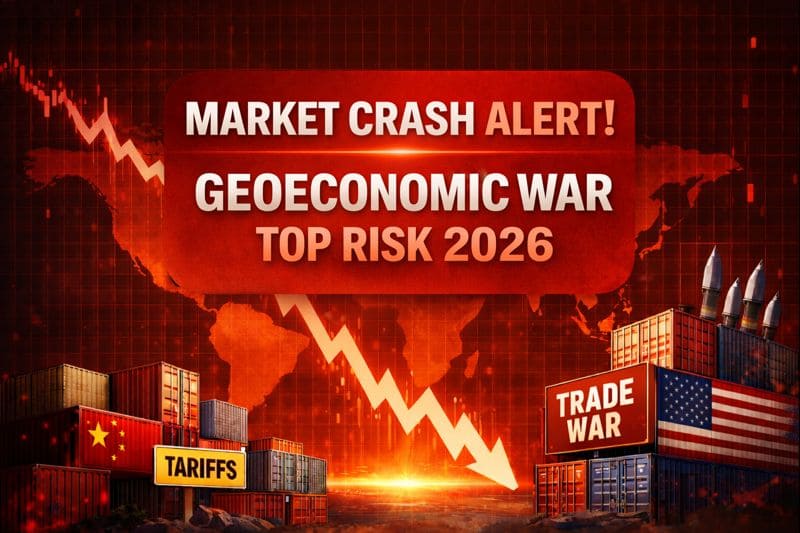
The World Economic Forum’s Global Risks Report 2026, released January 14, sends shockwaves through global markets by naming geoeconomic confrontation as the single greatest short-term risk for the year. Over 1,300 experts from business, government, academia, and civil society warn that escalating economic warfare—through tariffs, sanctions, investment screening, export controls, and weaponized trade—could trigger a full-blown material crisis.
The report highlights a sharp rise in geoeconomic tensions, up two places from last year and eight places in the two-year outlook. It describes an emerging “Age of Competition” where multilateral cooperation gives way to fragmented blocs, protectionism, and strategic decoupling. This shift threatens supply chains, capital flows, and investor confidence worldwide.
Why Geoeconomic War Tops the List
Geoeconomic confrontation now outranks interstate armed conflict, extreme weather events, societal polarization, and misinformation/disinformation as the most severe immediate threat. Respondents cite rising protectionist policies, US-China rivalry, EU carbon border taxes, and retaliatory measures as key drivers.
The report notes that 53% of leaders expect a “turbulent” global outlook over the next two years—up significantly from prior surveys—with only 1% anticipating stability. Tariffs and trade barriers are increasingly used as geopolitical tools, disrupting global trade volumes and inflating costs.
In India, Sensex and Nifty futures are already pointing to a weak Monday open, with analysts forecasting 1–2% downside as investors digest the report ahead of the weekly expiry and Davos discussions.
#WEF Global Risks Report 2026
— CNBC-TV18 (@CNBCTV18News) January 14, 2026
#GEOECONOMIC CONFRONTATION TOP GLOBAL RISK
#Over 50% of leaders expect a "turbulent" global outlook over next 2 years
#Tariffs increasingly being used as a geopolitical tool
@R_Dhanrajani breaks
Other Rising Risks and Long-Term Outlook
Short-term (2026): Geoeconomic confrontation leads, followed by interstate conflict, extreme weather, societal polarization, and misinformation. Economic downturn and inflation remain elevated.
Long-term (2036): Environmental risks dominate—extreme weather, biodiversity loss, ecosystem collapse—but debt distress and adverse AI outcomes climb rapidly. The report warns of compounding crises where economic fragmentation worsens climate adaptation and social cohesion.
(Responsive / Native Ad)
For emerging markets like India, the dual impact is clear: opportunities from supply-chain diversification away from China, but severe risks from global trade slowdowns, higher commodity prices, and capital flight during risk-off periods.
Investor Takeaways and Market Impact
Markets are pricing in heightened volatility. Global equities dipped post-release, with tech and export-heavy sectors most vulnerable. In India, IT, pharma, and auto exporters face tariff exposure, while domestic cyclicals may see short-term pressure.
Experts advise:
- Increase cash/hedge positions
- Diversify into defensive sectors (FMCG, utilities)
- Monitor US trade policy signals during Davos
- Watch RBI for rupee defense moves
The WEF report serves as a stark warning: geoeconomic fragmentation is no longer hypothetical. As nations prioritize strategic autonomy, investors brace for a bumpy 2026. Monday’s opening will likely reflect this unease.
Stay tuned for live market updates and Davos reactions on HotBuzz.in.
WEF Global Risks Report 2026: Geoeconomic confrontation tops the list of global risks for 2026, followed by interstate conflict, extreme weather, societal polarization and misinformation and disinformation. #WEF #GlobalRisks
— WEF Insights (@WEFInsights) January 14, 2026