 Hot
Hot
Vitamin D Crash: 80% of Indians Deficient – Symptoms You Shouldn’t Ignore
India, the land of endless sunshine, is paradoxically facing a massive Vitamin D deficiency crisis. Recent studies and expert reports estimate that 70-90% of the population – often cited around 80% in community surveys – has low levels of this crucial nutrient. A 2025 nationwide analysis by Metropolis Healthcare found 46.5% deficient and 26% insufficient (nearly 73% suboptimal), with southern states like Kerala, Tamil Nadu, and Puducherry exceeding 50% deficiency despite tropical climates. Other reports, including multi-city analyses, peg rates as high as 80-90% in ostensibly healthy adults, with urban youth under 25 showing up to 84% deficiency.
This “sunshine paradox” stems from lifestyle shifts: indoor jobs, air-conditioned homes, sunscreen use, full-body clothing, pollution blocking UVB rays, and vegetarian diets low in natural sources. Even in rural areas, limited midday sun exposure contributes. The result? A silent epidemic affecting bones, immunity, mood, and more.
Key Symptoms You Shouldn’t Ignore
Vitamin D deficiency often creeps in unnoticed, but warning signs appear over time:
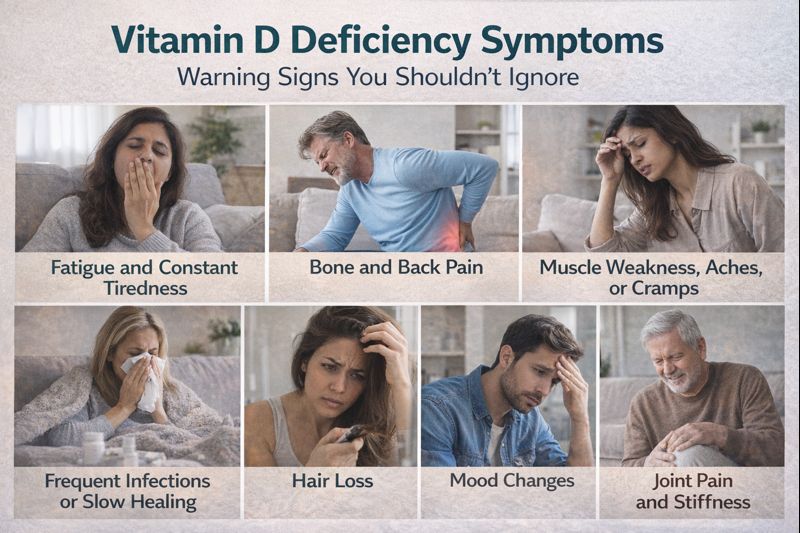
- Fatigue and Constant Tiredness – Feeling drained despite rest is one of the earliest red flags. Low levels impair energy production at the cellular level.
- Bone and Back Pain – Chronic aches in the lower back, hips, or legs signal poor bone mineralization. In adults, this can progress to osteomalacia (soft bones).
- Muscle Weakness, Aches, or Cramps – Difficulty climbing stairs, getting up from chairs, or frequent cramps point to Vitamin D’s role in muscle function.
- Frequent Infections or Slow Healing – Weakened immunity makes you prone to colds, flu, or delayed wound recovery.
- Hair Loss – Excessive shedding or thinning can link to deficiency.
- Mood Changes – Depression, anxiety, or irritability are common, as Vitamin D influences brain chemicals like serotonin.
- Joint Pain and Stiffness – Morning aches or worsening arthritis symptoms.
In severe cases, especially in children, it leads to rickets (bowed legs, delayed growth); in adults, osteoporosis and higher fracture risk.
Hidden Risks and Long-Term Impact
Beyond symptoms, low Vitamin D raises chances of diabetes, heart disease, hypertension, autoimmune issues, and even some cancers. In India, where tuberculosis remains prevalent, deficiency worsens outcomes. Pregnant women face higher preeclampsia risk, while kids show stunted growth.
(Responsive / Native Ad)
Young adults and women are hit hardest – urban office-goers, veiled individuals, and those with darker skin (which needs more sun for synthesis) top the list.
Simple Prevention and Fixes
The good news: it’s fixable.
- Safe Sun Exposure – Aim for 15-30 minutes of midday sun (10 AM-3 PM) on arms, legs, and face 3-4 times a week. Avoid peak hours to prevent burns.
- Dietary Boost – Include fatty fish (salmon, mackerel), egg yolks, fortified milk/cereals, mushrooms exposed to sun, and ghee. Vegetarians can opt for fortified foods or mushrooms.
- Supplements – Consult a doctor for blood tests (25(OH)D levels). Common advice: 60,000 IU weekly for 8 weeks to correct deficiency, then maintenance (1,000-2,000 IU daily). Don’t self-dose high amounts.
- Lifestyle Tweaks – Reduce indoor time, limit sunscreen on non-exposed areas during short outings.
Early detection via simple blood tests can prevent complications. Experts urge routine screening, especially in high-risk groups.
Don’t ignore the signs – this “silent epidemic” is widespread but reversible. Get tested, step into the sun wisely, and reclaim your health.