 Hot
Hot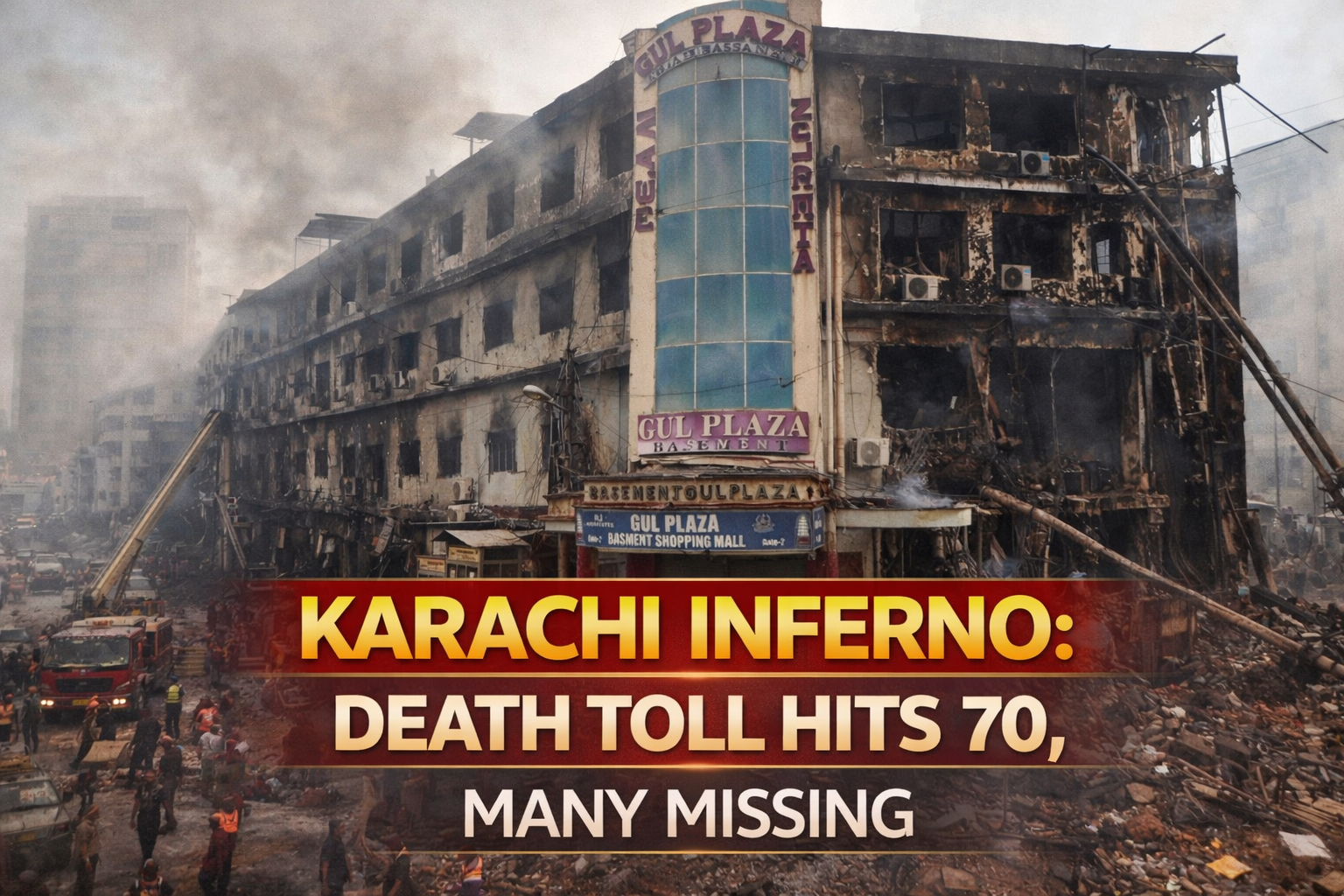
Karachi Inferno: Death Toll Hits 70 in Gul Plaza Fire Tragedy – Minors Among Missing
A devastating fire that engulfed Karachi’s Gul Shopping Plaza has turned into one of Pakistan’s deadliest building disasters in recent years. The blaze, which erupted late on January 17, 2026, in the basement of the multi-storey commercial complex in Saddar area, spread rapidly through over 1,200 shops, trapping hundreds amid locked exits, poor ventilation, and collapsed structures.
As of January 22, 2026, the confirmed death toll has climbed to 70, according to latest updates from Sindh authorities and rescue officials. A major grim discovery on January 21 saw 30 bodies recovered from a single shop (“Dubai Crockery”) on the mezzanine floor – many burned beyond recognition after being trapped behind shutters. This single find pushed the toll from around 31 to 61 initially, with further recoveries bringing it to 70 amid ongoing debris clearance.
Rescue operations, now shifting to recovery mode after 36+ hours of firefighting, face extreme challenges: structural instability, lingering smoke, intense heat, and the risk of further collapse. Teams use thermal imaging cameras, cutters, and heavy machinery, but hopes for survivors have faded. The Sindh government released a missing persons list of 73 individuals – including 16 minor boys aged 10-18, many working as shop assistants or shopping with family. Women, elderly, and adults up to 69 are also unaccounted for. Mobile data confirmed at least 31 were inside during the blaze.
The fire started in the basement, possibly from an electrical short circuit or gas leak (investigations ongoing), and quickly engulfed upper floors. Witnesses described chaos: smoke filling corridors, locked emergency exits (common in Karachi’s unregulated markets), and people jumping from windows. One firefighter died battling the inferno, adding to the toll.
Safety Failures and Outrage
This tragedy echoes past horrors like the 2012 Baldia Factory fire (over 260 dead) and highlights chronic issues in Karachi: lax fire safety enforcement, illegal constructions, blocked exits for security or space, inadequate sprinklers, and overcrowding in commercial zones. The Gul Plaza building, housing electronics, crockery, and clothing shops, lacked proper fire exits and had no functional alarm system, per initial probes.
Public fury is mounting. Families gather outside the site, protesting delays and demanding justice. “My nephews were just shopping,” one relative told media, voice cracking. The Sindh Chief Minister ordered a judicial inquiry, building demolition (after full recovery), and compensation for victims. PM Shehbaz Sharif expressed condolences, promising swift action.
(Responsive / Native Ad)
The disaster has renewed calls for stricter regulations: mandatory fire audits, open exits, and penalties for violators. Karachi’s fire department is understaffed and underequipped for such scale.
As search continues, the toll could rise further – officials fear it may exceed 100 once full debris is cleared. DNA testing begins for identification, prolonging agony for families.
This inferno is a stark reminder of urban safety neglect in Pakistan’s bustling cities. Prayers for the lost, strength for survivors, and urgent reform to prevent repeats.
Karachi Gul Plaza Fire death toll rises to 61 as 30 bodies found in one shop. @shivanipost with more details. #Karachi #Karachifire
— IndiaToday (@IndiaToday) January 22, 2026
Heartbreaking news from Karachi. 30 bodies were found in a single shop at Gul Plaza on Jan 21, 2026, bringing the total death toll to 61. With 86 still missing and the building set for demolition, this is one of the worst fire tragedies in Pakistan’s history.
— huzaifa (@huzaifa_7711) January 22, 2026