 Hot
Hot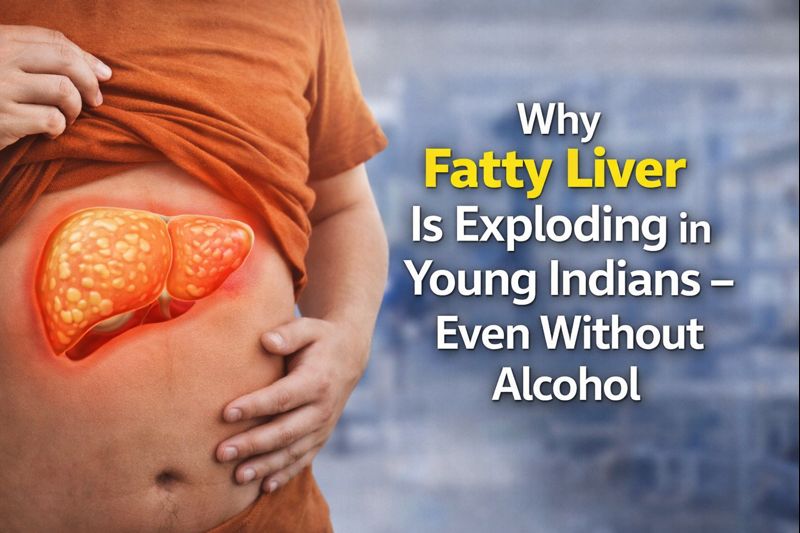
Why Fatty Liver Is Exploding in Young Indians — Even Without Alcohol
Non-alcoholic fatty liver disease (NAFLD), now often called metabolic dysfunction-associated steatotic liver disease (MASLD), has become one of the fastest-growing health crises in India — and it’s hitting young people hard, including many who have never touched alcohol.
Recent studies and hospital data paint a stark picture: up to 30–40% of urban Indian adults now have fatty liver, with rates among those aged 20–40 jumping dramatically in the last decade. In some metro cities like Delhi, Mumbai, Hyderabad, and Bengaluru, liver specialists report that 1 in 3–4 young patients coming for routine check-ups or unrelated complaints show fatty liver on ultrasound — many in their late 20s and early 30s.
What makes this alarming is that the majority are non-drinkers. Unlike alcoholic liver disease, NAFLD/MASLD is driven by metabolic factors — and modern Indian lifestyles are fueling the explosion.
The Main Culprits Behind the Surge
-
Ultra-Processed & Sugary Foods
India has seen an unprecedented rise in consumption of packaged snacks, sugary drinks, refined carbs (maida-based items like pizza, burgers, naan, white bread), and sweets. Fructose from high-fructose corn syrup (common in soft drinks and packaged juices) is directly deposited as fat in the liver. Even “healthy” Indian diets heavy in rice, rotis, potatoes, and sweets contribute when portions are large. -
Sedentary Lifestyle & Desk Jobs
Long hours sitting in offices, IT jobs, online classes, and reduced physical activity mean calories are not burned. Muscle mass drops, insulin resistance rises, and fat accumulates in the liver. Gym culture exists but is limited to a small urban elite — most young Indians walk far less than previous generations. -
Hidden Obesity & Central Fat
Many young Indians have “normal” BMI but high visceral fat (belly fat) — the “skinny-fat” Indian phenotype. This central obesity is strongly linked to NAFLD. Even a 5–10 kg gain in adulthood can tip the balance. -
Insulin Resistance & Pre-Diabetes Epidemic
India is the diabetes capital; prediabetes starts in the 20s for many. Insulin resistance forces the liver to store excess glucose as fat — the first step in fatty liver. -
Poor Sleep, Stress & Hormonal Imbalance
Chronic stress, late-night screen time, irregular sleep, and high cortisol levels worsen insulin resistance and fat storage in the liver.Mid-Article Ad Space
(Responsive / Native Ad) -
Genetic & Ethnic Factors
South Asians (including Indians) are genetically predisposed to store more fat in the liver and abdomen at lower BMI levels compared to Caucasians — the “thin-fat” paradox.
Symptoms Many Young People Ignore
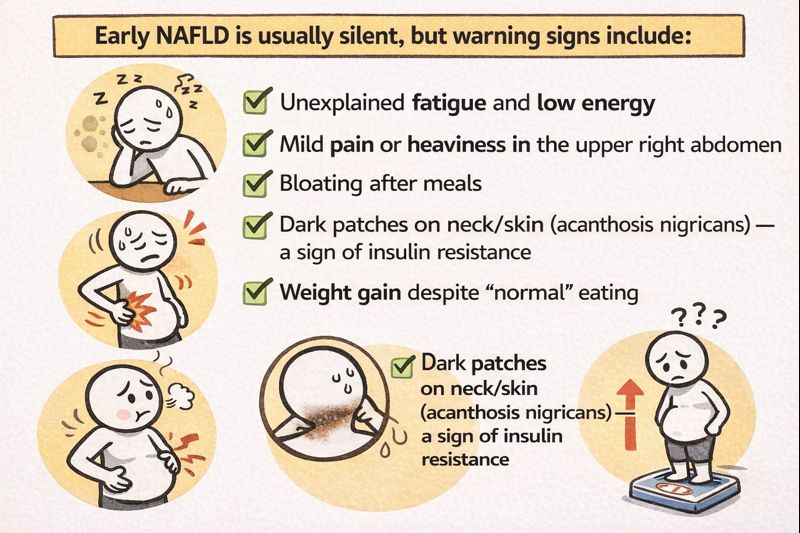
Early NAFLD is usually silent, but warning signs include:
- Unexplained fatigue and low energy
- Mild pain or heaviness in the upper right abdomen
- Bloating after meals
- Dark patches on neck/skin (acanthosis nigricans) — a sign of insulin resistance
- Weight gain despite “normal” eating
If ignored, it can progress to NASH (inflammation), fibrosis, cirrhosis, liver failure, or even liver cancer.
What Can Be Done?
The good news: NAFLD is highly reversible in early stages.
- Cut refined carbs & sugars drastically — switch to whole grains, millets, vegetables.
- Move more: 30–45 min brisk walking daily + strength training 2–3 times/week.
- Aim for 7–9 hours quality sleep.
- Intermittent fasting or time-restricted eating shows promise in studies.
- Get screened: A simple ultrasound + liver function tests (ALT/AST) during routine check-ups.
- If overweight, even 5–10% body weight loss can reduce liver fat by 30–50%.
Doctors urge: “Don’t wait for symptoms — check early.” With lifestyle changes, most young people can reverse fatty liver before it becomes serious.
This silent epidemic is preventable — but only if India’s youth act now.