 Hot
Hot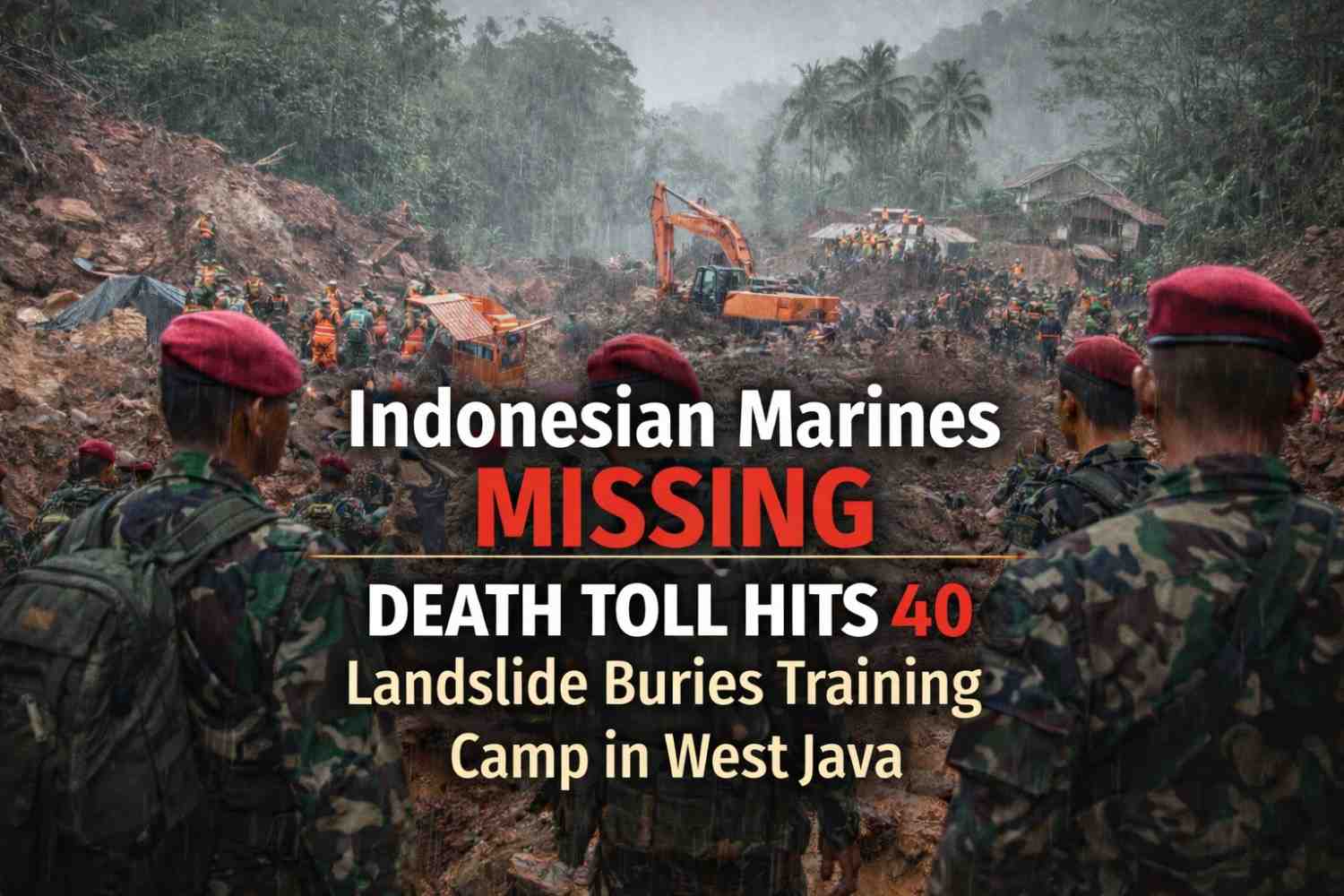
A devastating landslide in West Java, Indonesia, has claimed at least 40 lives, with the death toll rising sharply as rescue efforts continue under treacherous conditions. The disaster struck early Saturday in Pasir Langu village, Bandung Barat regency, burying a military training camp and dozens of homes on the slopes of Mount Burangrang.
The incident highlights Indonesia’s vulnerability to natural disasters during the monsoon season, but the involvement of elite Indonesian Navy marines has turned this into a national tragedy with security implications.
Military Unit Caught in the Disaster
A 23-member unit of Indonesian marines was conducting intensive training in the rugged terrain when the landslide hit predawn. The soldiers were preparing for long-duration border patrols along the Indonesia-Papua New Guinea frontier.
Navy officials confirmed that 23 marines are among the confirmed fatalities, with initial reports indicating some were swept away or buried under meters of mud, rocks, and debris. Rescue teams have recovered bodies in body bags, but unstable ground and persistent rain have slowed progress.
The military loss has shocked the armed forces, as personnel who often lead disaster responses now mourn their own comrades. This adds a layer of urgency, with the navy and army deploying additional support to aid civilian rescuers.
🚨 Indonesia landslide death toll rises to 34 in Pasir Langu village, West Java. Including 23 soldiers killed during training — after heavy rains triggered the disaster on January 24, 2026; 32 still missing, searches hampered by ongoing rain.
— Xnews_with_Grok (@Xnews_with_grok) January 28, 2026
Cause and Contributing Factors
Relentless heavy rainfall over consecutive nights saturated the steep slopes, triggering the massive slide. Deforestation for vegetable farms and plantations around Pasir Langu has been blamed by local authorities, as cleared land reduces soil stability and increases runoff.
West Java Governor Dedi Mulyadi pointed to these agricultural practices as a key factor and pledged to relocate affected residents to safer areas. Indonesia’s archipelago geography, with volcanic mountains and high rainfall from October to April, makes such events frequent—but rarely this deadly when combined with human activity.
The landslide buried over 30-50 houses, displacing hundreds and destroying livelihoods in the rural hilly community about 100 km southeast of Jakarta.
Rescue Operations Face Major Challenges
More than 800 rescuers, including military, police, volunteers, and heavy equipment operators, are on site. Nine excavators work to clear debris, but narrow access roads, unstable ground, and ongoing rain limit machinery use. Teams often resort to digging with bare hands or small tools to avoid triggering further slides.
(Responsive / Native Ad)
National Disaster Mitigation Agency spokesperson Abdul Muhari noted: “The ground is still unstable. We had to pull divers back because the mud is shifting again.” Rain continues to hamper searches, with operations paused or slowed during downpours.
The slide debris stretches over 2 km, filled with mud up to 5 meters deep in places, mixed with uprooted trees and rocks. Drones and water pumps assist, but hope for survivors fades as days pass.
Broader Implications and Lessons
This tragedy comes months after cyclone-induced floods and landslides in Sumatra killed around 1,200 and displaced over a million. It underscores the need for better land management, reforestation, and early warning systems in vulnerable zones.
The military angle amplifies national attention—losing trained marines impacts border security readiness. It also raises questions about training site safety in high-risk areas during wet seasons.
For local villagers, the disaster erased homes and farms overnight, leaving families grieving and homeless. Government relocation promises offer some relief, but recovery will take years.
Search operations for the 32 people still missing after a landslide in Indonesia's West Java were hampered by rain on Wednesday morning, the country's disaster mitigation agency said, as it raised the death toll to 34 https://www.reuters.com/business/environment/death-toll-indonesias-landslides-rises-34-official-says-2026-01-28/
— Reuters (@Reuters) January 28, 2026
As rain persists and rescuers push on, the West Java landslide serves as a stark reminder of nature’s power and the human cost when preparedness lags. The nation watches anxiously for updates on the missing, including those elite marines whose service ended in tragedy.