 Hot
Hot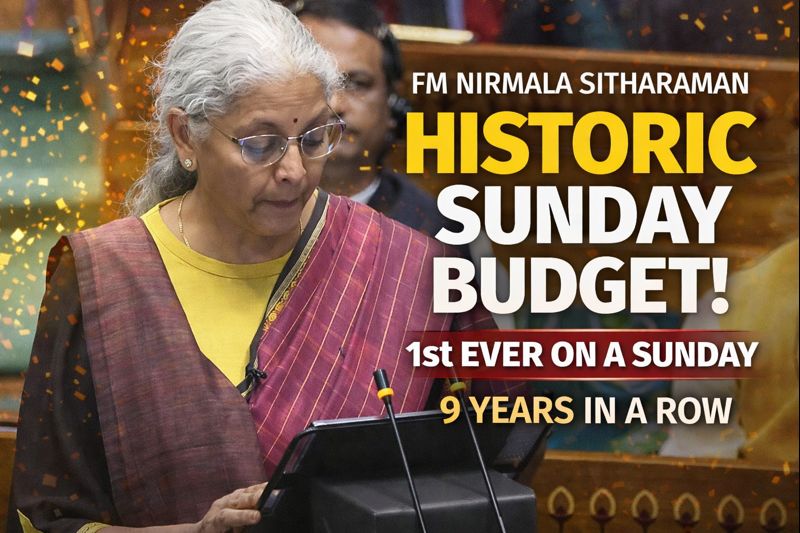
Finance Minister Nirmala Sitharaman stepped into Parliament today, February 1, 2026, to present the Union Budget 2026-27 – marking a historic first in independent India’s fiscal calendar: the Budget delivered on a Sunday.
Starting her speech at 11 AM in the Lok Sabha, Sitharaman became the only Finance Minister to present nine consecutive full budgets under one Prime Minister. This Sunday session breaks from tradition, as previous weekend budgets (when February fell on holidays) were shifted to Saturday or avoided entirely.
The shift stems from the 2017 reform advancing the Budget date to February 1 for more parliamentary debate time before the April 1 fiscal year start. With February 1 landing on Sunday in 2026, the government stuck to the date – prioritizing continuity over convention.
Markets opened specially for live trading, reflecting the event’s economic weight. Millions of taxpayers tuned in, especially waiting for potential income tax slab tweaks expected around 12:15 PM.
Finance Minister Nirmala Sitharaman on Sunday presented the Union Budget 2026 in the Lok Sabha, marking her ninth consecutive Budget and bringing her closer to the record of 10 Budgets presented by former Prime Minister Morarji Desai. Speaking during the presentation, Sitharaman said the government is choosing the path of reforms over rhetoric and reaffirmed its commitment to steps aimed at making India a Viksit Bharat. By✍🏻: Anushree Gaikwad
— Mid Day (@mid_day) February 1, 2026
Why This Sunday Budget Stands Out
Historically, Budgets avoided Sundays. In 1999, when February 28 was Sunday, Yashwant Sinha presented on Saturday, February 27. No full Budget has occurred on Sunday since Independence – until today.
Sitharaman prepared the document in Kartavya Bhavan, carrying the iconic red ‘bahi khata’ briefcase. She wore a magenta Kanchipuram silk saree, continuing her tradition of regional handloom choices.
This Budget emphasizes reforms, youth empowerment (‘yuva shakti’), fiscal discipline, and Viksit Bharat goals. No major income tax relief was announced early in the speech, but focus shifted to infrastructure, education, women-led initiatives, and sector boosts like textiles via the new ‘Mahatma Gandhi Handloom Scheme’.
Fiscal deficit projections: 4.4% for FY26, 4.3% for FY27. Capital expenditure saw increases, with customs duty cuts on aircraft parts for defence MRO and other targeted measures.
Taxpayer Focus: The Wait for Slab Announcements
Middle-class Indians – from salaried employees in Hyderabad to small business owners in Telangana – remain glued to screens. Expectations were high for standard deduction hikes, new regime tweaks, or slab adjustments to ease inflation pressures.
(Responsive / Native Ad)
While the speech wrapped in about 84 minutes without blockbuster tax cuts, announcements included a new Income Tax Act effective April 1, 2026, rationalized provident fund rules, and exemptions for accident victims. No changes to existing slabs were confirmed, disappointing some, but the emphasis stayed on long-term growth and stability.
Markets reacted cautiously, dipping into red during the presentation amid mixed signals on reforms vs. continuity.
Broader Implications for 2026 Economy
This Budget arrives amid global uncertainties, with India aiming to sustain momentum toward a developed nation by 2047. Key highlights include:
- Strengthened higher education and women’s entrepreneurship via ‘She MARTS’ hostels in every district.
- Boost to handloom, khadi, and handicrafts.
- Rationalized tonnage tax for shipping alignment.
- Continued capex push for infrastructure.
For Telangana and South India, implications include potential railway/urban development allocations and benefits from national schemes on skilling and rural economy revival.
The Sunday timing allowed wider public engagement – families watched together, social media buzzed live, and discussions on tax relief dominated WhatsApp groups and X.
Whenever Investors expect tax relief #Budget2026
— Sanket (@BTechComedian) February 1, 2026
As the dust settles on this unique presentation, focus shifts to parliamentary debates, implementation timelines, and how these measures impact everyday Indians. Sitharaman’s steady hand continues to guide India’s fiscal path – now etched with a Sunday milestone.