 Hot
Hot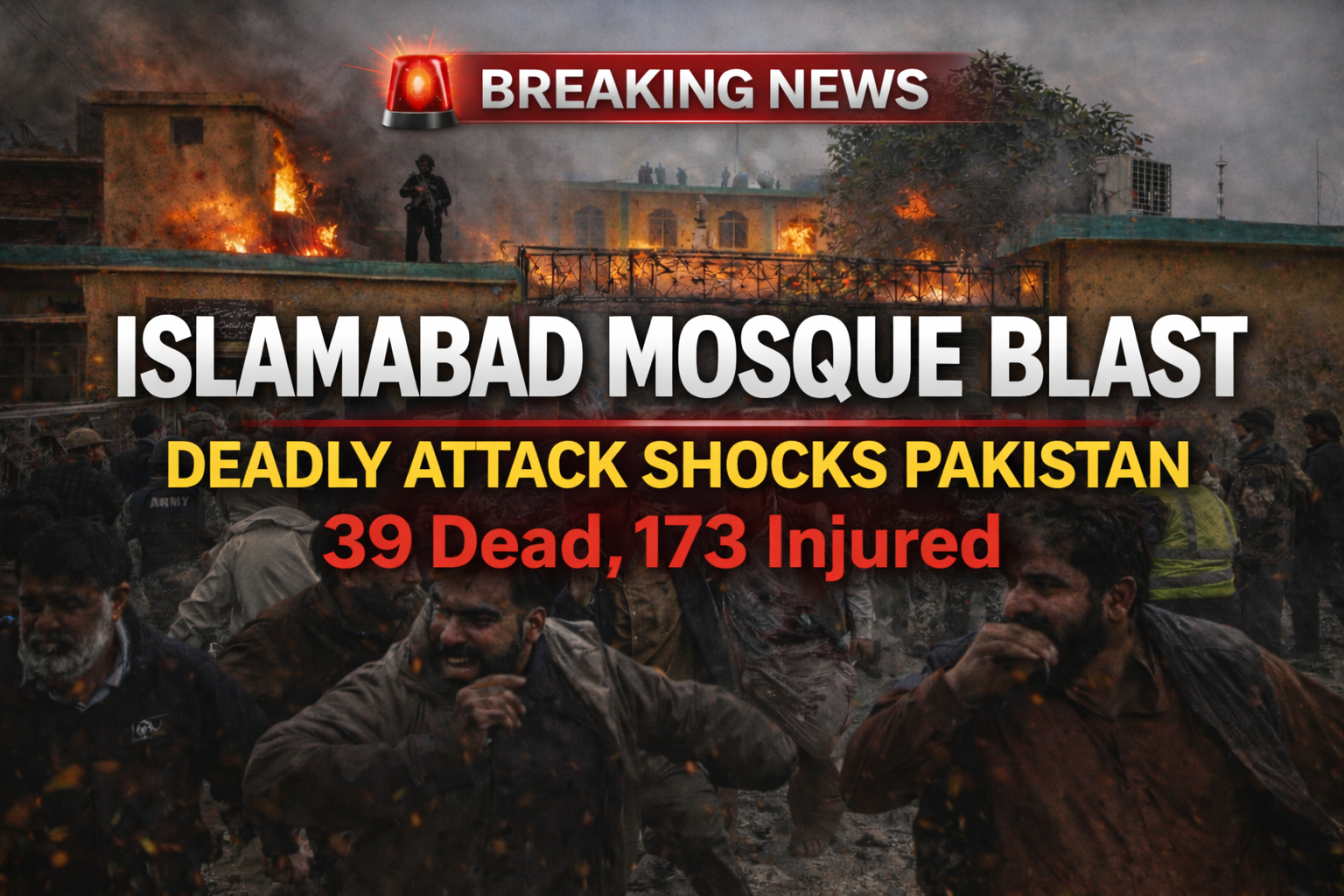
A powerful suicide bombing struck a Shia mosque in Islamabad on February 6, 2026, claiming at least 39 lives and leaving 173 people injured, many in critical condition. The attack took place at the Khadija Tul Kubra mosque in Tarlai Kalan during Friday congregational prayers, turning a routine act of worship into one of the deadliest incidents to hit the Pakistani capital in more than a decade.
The explosion occurred near the main entrance where worshippers were entering or seated in the last rows. Initial reports indicate the attacker may have been stopped or challenged by mosque security before detonating the device, which was packed with ball bearings and shrapnel to inflict maximum damage. Security forces quickly cordoned off the area as rescue teams and local volunteers rushed injured people to nearby hospitals in private vehicles.
Hospitals across Islamabad activated emergency protocols. Multiple victims arrived with severe blast trauma, amputations, and internal injuries. Medical staff described scenes of chaos as the casualty numbers continued to climb through the day.
Official Response and Condemnation
Prime Minister Shehbaz Sharif described the bombing as “an attack on the soul of Pakistan” and vowed that the perpetrators would face justice. Interior Ministry officials confirmed the incident was a suicide attack and said forensic teams were working to identify the bomber and trace any support network.
Strongly condemn the heinous suicide attack on worshippers at Khadija Tul Kubra mosque in Islamabad. 39 martyrs & over 170 injured. Our thoughts & prayers are with the bereaved families. The state will spare no effort to bring the culprits to justice. May Allah grant patience.
— Shehbaz Sharif (@CMShehbaz) February 6, 2026
The blast has revived serious concerns about sectarian violence targeting minority Shia communities. Similar attacks in the past have often been linked to banned militant outfits operating from across the Afghan border, though no group has claimed responsibility at the time of writing.
Horrific suicide bombing at a Shia mosque in Islamabad today. At least 39 killed, 173 wounded during Friday prayers. This is yet another reminder that terrorism continues to threaten Pakistan’s stability. Security must be drastically improved at all religious sites. #IslamabadBlast
Mid-Article Ad Space— Dawn.com (@dawn_com) February 6, 2026
(Responsive / Native Ad)
Security Lapse and Regional Context
Islamabad has long been considered a relatively secure zone compared to Khyber Pakhtunkhwa or Balochistan. The last suicide attack of comparable scale in the capital occurred more than ten years ago. The fact that militants were able to strike so close to the seat of government points to possible intelligence or perimeter security failures.
Analysts note that recent militant resurgence—fueled by cross-border sanctuaries and internal recruitment—has put pressure on both civilian and military leadership. Religious sites, especially those belonging to minority sects, remain soft targets due to large gatherings and limited armed protection.
What This Means Moving Forward
Beyond the immediate tragedy, the bombing carries several long-term implications:
- Increased sectarian tension — The deliberate targeting of a Shia congregation risks inflaming existing divides and could trigger retaliatory incidents.
- Pressure on counter-terrorism policy — The government will face renewed calls for stronger border management, better intelligence coordination, and more visible security at mosques and Imambargahs.
- Public confidence — Repeated high-profile attacks erode trust in the state’s ability to protect citizens, especially in urban centers.
- Healthcare strain — With hospitals already stretched, treating such a large number of blast victims will test emergency response capacity for weeks.
Survivors and grieving families will need extensive psychological support, financial aid, and community solidarity in the coming months. Religious leaders from all sects have begun issuing joint statements calling for unity and calm.
Pakistan has endured terrorism for decades. Each major attack forces the same difficult questions: how many more lives must be lost before systemic change becomes reality? For now, the focus remains on saving the injured, identifying the perpetrators, and preventing the next tragedy.