 Hot
Hot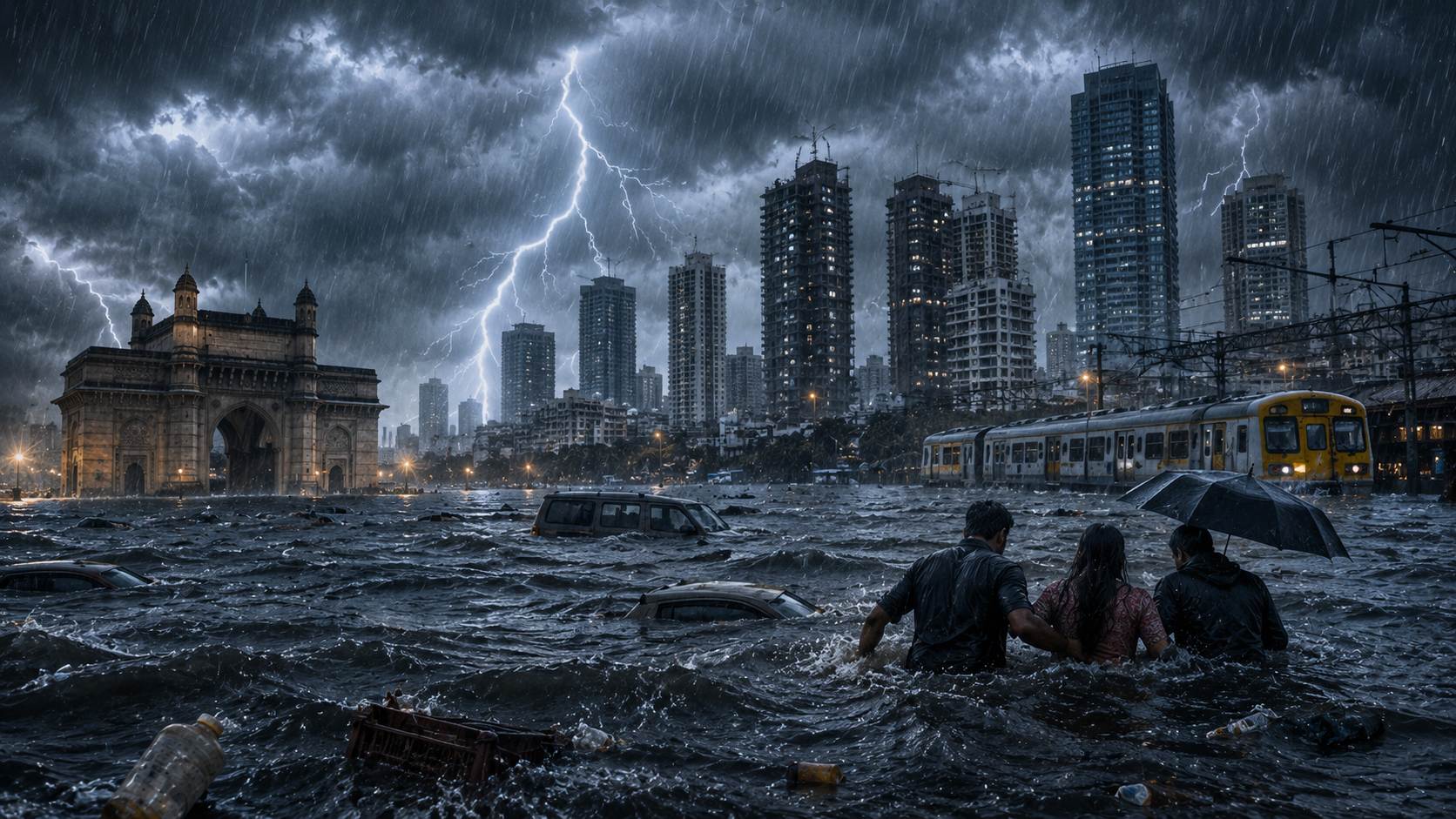
Mumbai’s monsoon has arrived with a vengeance.
The city of dreams woke up on the morning of June 24, 2026, to a wall of water — and the India Meteorological Department (IMD) wasted no time responding: a Red Alert was issued at 4 a.m., warning of intense rainfall, thunderstorms, and lightning.
By the Numbers
- 200–300mm of rainfall recorded across many parts of the city in a 24-hour period
- Red Alert issued by IMD for Mumbai and Palghar at 4 a.m.
- Alert downgraded to Orange Alert at 7 a.m. as the most intense band of rain passed
- Multiple areas under water as of mid-morning
Train Services Hit Hard
The lifeline of Mumbai — its suburban train network — bore the brunt of the deluge:
- Trans-Harbour Line experienced a significant disruption due to a track cave-in between Turbhe and Koparkhairane stations, caused by heavy water flow. Services were impacted before railway authorities restored operations under speed restrictions
- Western Railway services were largely unaffected and running as scheduled
- Overcrowding was reported across all lines as delays cascaded
Roads, Buildings, and Trees
The damage on the ground was extensive:
- Andheri subway was temporarily shut to vehicular traffic due to dangerous waterlogging
- King’s Circle, Dadar submerged in knee-deep water
- Trees uprooted across multiple localities
- A wall collapsed in at least one incident, with a car crushed underneath
- 200mm+ rain in 24 hours flooded low-lying areas in Kurla, Bhandup, and Vikhroli
Where Was the Worst Flooding?
| Area | Impact |
|---|---|
| Andheri Subway | Closed to vehicles |
| King’s Circle | Deep waterlogging |
| Turbhe–Koparkhairane | Track cave-in, train disruption |
| Dadar | Road flooding |
| Kurla | Low-lying area submerged |
What Mumbai Did Right
Despite the chaos, municipal response was swift:
- MCGM emergency teams were deployed across all wards before dawn
- Pumping stations were activated in flood-prone areas
- Railway officials quickly assessed track damage and restored services under speed restrictions
- BMC’s Disaster Control Room was put on high alert
Safety Advisory for Mumbaikars
If you’re in Mumbai today:
(Responsive / Native Ad)
- Avoid low-lying areas and underpasses
- Check train delays via the Mumbai Rail app or official CSMT/WR announcements before stepping out
- Stay off coastal roads — high tides combined with monsoon rain can be especially dangerous
- Do not venture near swollen nullahs or rivers
The Bigger Picture
Mumbai’s first intense monsoon day in 2026 follows a pattern seen in recent years — the monsoon is arriving more abruptly and more intensely than in decades past, leaving city infrastructure scrambling to cope.
With climate patterns shifting, will Mumbai ever build a drainage system truly capable of handling what the monsoon now delivers? That remains the city’s perennial, unanswered question.
Stay safe, Mumbai. And stay tuned to TrendPulse for live monsoon updates.