 Hot
Hot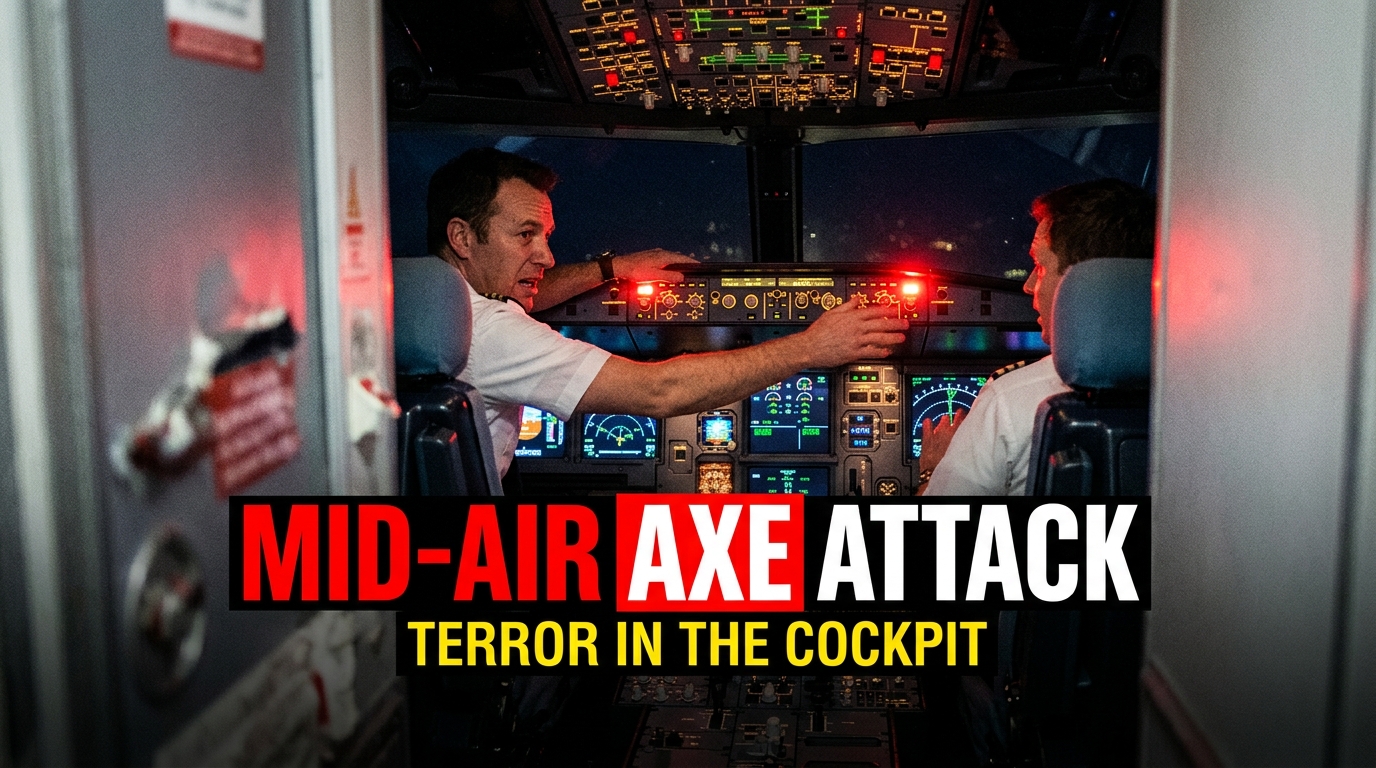
On September 30, 2026, Flydubai Flight FZ1073, a Boeing 737 MAX 8 carrying 180 passengers and crew from Dubai to Tel Aviv, became the scene of one of commercial aviation’s most harrowing close calls. What was meant to be a routine three-hour flight over the Arabian Peninsula turned into an attempted mass-casualty terrorist attack when first officer Hamam al-Hammami, a 34-year-old Omani national, ambushed the flight’s captain from behind with an emergency crash axe inside the flight deck.
The hero of the sky was Captain Smit Machchhar, an experienced Indian aviator. Despite sustaining severe head and neck lacerations in the surprise assault, Machchhar fought off his assailant, engaged autopilot overrides, and managed to flip the emergency cockpit door switch—allowing crew and passengers to breach the flight deck and subdue the rogue co-pilot. The battered jet made an emergency landing at Prince Sultan bin Abdulaziz Airport in Tabuk, Saudi Arabia, with zero fatalities.
While Captain Machchhar is rightly being celebrated worldwide—receiving formal commendations from UAE Crown Prince Sheikh Hamdan and Indian Prime Minister Narendra Modi—the unfolding investigation on October 5 has sparked explosive fallout across the international aviation and intelligence communities.
| Flight & Incident Details | Operational Specifics |
|---|---|
| Flight Number & Aircraft | Flydubai FZ1073 / Boeing 737 MAX 8 |
| Origin & Intended Destination | Dubai International (DXB) → Tel Aviv (TLV) |
| Emergency Diversion | Prince Sultan bin Abdulaziz Airport, Tabuk, Saudi Arabia |
| Souls on Board | 180 passengers and crew (All survived) |
| Commanding Pilot | Captain Smit Machchhar (Injured, stabilized) |
| Perpetrator | First Officer Hamam al-Hammami (Arrested, facing terror charges) |
| Altitude Loss During Struggle | ~16,000 feet rapid dive before recovery |
60 Seconds of Terror at 35,000 Feet: The Fight Inside the Locked Flight Deck
The cockpit voice recorder (CVR) and flight data paints a chilling sequence. Cruising at cruising altitude, al-Hammami waited until the flight reached intermediate airspace before retrieving the aircraft’s emergency crash axe. He launched a sudden, brutal attack against Captain Machchhar, with investigators confirming the co-pilot intended to incapacitate the captain and crash the Boeing 737 MAX 8 into a densely populated target in Tel Aviv.
Despite profound blood loss and blunt force trauma, Machchhar’s reflex training proved decisive. Wrestling against his attacker with one arm while fighting to stabilize erratic control inputs, Machchhar disengaged the manual lock on the armored cockpit security door. The struggle inadvertently shoved the flight control column forward, sending Flight FZ1073 into a terrifying 16,000-foot plunge that exceeded standard aerodynamic velocity limits and induced structural stress on the aircraft’s rudder.
The 16,000-Foot Freefall and the Off-Duty Aviators Who Breached the Deck
When the flight plummeted and the cockpit door buzzer clicked unlocked, the cabin crew immediately recognized catastrophic danger. Two off-duty commercial pilots traveling as passengers sprinted forward alongside flight attendants, forcefully storming the cockpit.
They pinned al-Hammami to the cockpit floor, using cable ties and emergency restraint cuffs to immobilize him. While cabin crew administered urgent first aid to stem Machchhar’s bleeding, the off-duty pilots assisted the captain in leveling the aircraft, pulling out of the steep descent just above 19,000 feet, and coordinating with Saudi air traffic control for an immediate priority descent into Tabuk.
“A Big Mistake”: The Catastrophic Regional Intelligence Failure That Let a Grounded Extremist Fly
The most disturbing revelation broke on Monday when Omani intelligence and security sources admitted to reporters: “There was a big mistake.”
(Responsive / Native Ad)
Official records indicate that al-Hammami had previously been grounded and barred from operating commercial aircraft within Oman by domestic authorities due to alarming extremist ideological postings and radicalized rhetoric. Despite this domestic blacklist, no GCC-wide red alert was transmitted. Flydubai’s recruitment screening failed to uncover the red flags, allowing a man deemed too dangerous to fly in Muscat to take the controls of passenger jets in Dubai.
“This incident exposes a catastrophic blind spot in Middle Eastern aviation security,” noted international aviation safety analyst Tariq Al-Hashimi. “A pilot flagged as an ideological threat in one Gulf nation was able to secure a right-seat commercial cockpit job less than an hour’s flight away. Cross-border intelligence interoperability failed completely.”
The Weapon Within Arm’s Reach: Why Crash Axes Are Stored Inside Modern Cockpits
The attack has ignited an urgent debate among global aviation regulators, including the FAA, EASA, and ICAO, regarding the presence of crash axes on the flight deck.
Mandated for decades under international safety regulations to chop through cockpit panels or escape windshields in the event of an electrical fire or post-crash jam, the crash axe has now twice in recent decades been turned into a weapon by suicidal or radicalized flight crew. Global pilot associations are already urging regulators to replace heavy steel crash axes with non-lethal pry bars, insulated composite cutting tools, or to house fire-escape axes in biometric, dual-credential locking boxes that cannot be accessed by a single pilot during routine flight operations.
Redefining Cross-Border Pilot Vetting Across GCC and Global Airspace
The diplomatic and operational repercussions of Flight FZ1073 are reverberating across governments:
- Unified GCC Pilot Vetting Database: Gulf civil aviation authorities are drafting emergency legislation to mandate centralized, real-time security clearances for all commercial aircrew across the UAE, Saudi Arabia, Oman, Qatar, Bahrain, and Kuwait.
- Enhanced Psychological & Digital Surveillance: Airlines are facing calls to institute continuous digital footprints monitoring and unannounced psychological reviews for active pilots, moving beyond cursory annual physicals.
- Cockpit Access Redundancy: New operational rules under consideration will mandate that a cabin crew member must always remain in the cockpit if one pilot steps out, with dual-occupancy monitoring protocols tightened across regional carriers.
Captain Smit Machchhar’s extraordinary courage prevented a catastrophic mass casualty event. But until civil aviation authorities close the systemic intelligence cracks that placed a radicalized attacker behind the controls, the haunting question remains: how many more warning signs are slipping through the cracks of international skies?