 Hot
Hot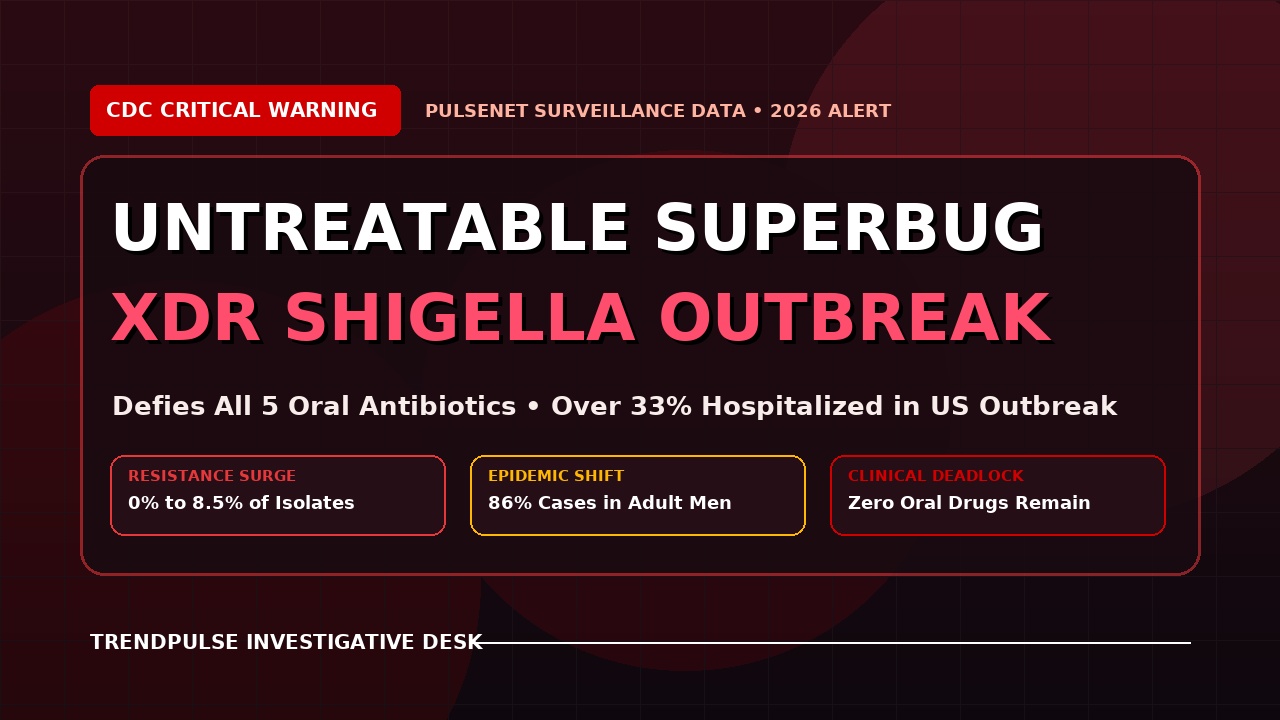
In a chilling milestone for the global antimicrobial resistance crisis, the US Centers for Disease Control and Prevention (CDC) has alerted infectious disease clinicians and emergency departments to an accelerating outbreak of extensively drug-resistant (XDR) Shigella. A comprehensive analysis tracking nearly 17,000 isolates across the CDC’s national PulseNet surveillance network revealed that strains resistant to all five frontline antimicrobial classes escalated from 0% between 2011 and 2015 to 8.5% in 2023, with subsequent clinical monitoring indicating continued domestic expansion into late 2026.
The epidemiological alert represents a critical inflection point: for the first time in modern gastroenterology, physicians managing acute shigellosis in the United States face common circulating strains for which zero FDA-approved oral antibiotics remain effective.
The Plasmid Shield: How Enteric Bacteria Stripped Modern Medicine of Five Oral Defenses
Shigella—a highly infectious Gram-negative bacterium requiring as few as 10 to 100 organisms to trigger violent bacillary dysentery—has historically succumbed to short outpatient courses of fluoroquinolones, macrolides, or cephalosporins. However, genomic sequencing of circulating XDR lineages reveals an evolutionary defense mechanism: the integration of broad-spectrum plasmid-mediated resistance genes.
These mobile genetic cassettes confer simultaneous, robust resistance across five benchmark oral drug classes: ampicillin, ciprofloxacin, ceftriaxone, azithromycin, and trimethoprim-sulfamethoxazole (TMP-SMX). When patients receive standard empirical prescriptions for acute infectious diarrhea, the antibiotics decimate protective intestinal microflora while allowing XDR Shigella colonies to multiply unimpeded, heightening the severity of colonic ulceration and systemic inflammation.
| Antimicrobial Class | Historic Clinical Role | Current XDR Resistance Status | Clinical Consequence |
|---|---|---|---|
| Fluoroquinolones (Ciprofloxacin) | Primary first-line oral defense | Complete multi-point mutation resistance | Immediate outpatient treatment failure |
| Macrolides (Azithromycin) | Pediatric and alternative oral standard | Plasmid-encoded mphA / ermB evasion | Elimination of safe oral alternative |
| Cephalosporins (Ceftriaxone) | Inpatient oral/injectable mainstay | Broad-spectrum beta-lactamase (ESBL) degradation | Standard pediatric protocols rendered obsolete |
| Folate Inhibitors (TMP-SMX) | Historical enteric baseline | Widespread chromosomal & plasmid resistance | Ineffective across all clinical demographics |
| Carbapenems (Meropenem) | Last-resort intravenous rescue | Fragile susceptibility preserved | Requires central IV lines and inpatient admission |
An Epidemiological Metamorphosis: From Daycare Stool to Adult Intimate Transmission
Beyond its formidable genetic defenses, the pathogen has executed a dramatic epidemiological transformation. Historically characterized as a disease of pediatric daycare centers, contaminated municipal water systems, or international travel to developing regions, XDR Shigella has firmly rooted itself in domestic transmission networks.
The CDC’s demographic data demonstrates that 86.2% of confirmed XDR cases occur among adult men, predominantly spreading via direct and indirect sexual contact within social networks of gay, bisexual, and other men who have sex with men (GBMSM). Critically, the vast majority of infected patients reported zero international travel prior to symptom onset, confirming that the superbug is transmitting sustainably within major American metropolitan centers. Because microscopic fecal-oral transmission occurs during intimate contact, routine condom usage provides only partial protection, and the bacteria can remain shed in asymptomatic stool for weeks after diarrheal symptoms subside.
The Clinical Impasse: When Outpatient Gastro Illness Requires Inpatient IV Infusions
The absolute lack of viable oral treatment options is placing acute strain on hospital infrastructure. The CDC report confirmed that over 33% (more than one-third) of diagnosed XDR Shigella patients require full hospital admission.
(Responsive / Native Ad)
Patients presenting with severe dysentery, toxic megacolon risks, high fevers, or immunocompromising conditions (including HIV) can no longer pick up a 5-day pill prescription from a neighborhood pharmacy. Instead, treatment mandates hospital admission for peripherally inserted central catheter (PICC) lines and twice-daily intravenous infusions of reserve antimicrobials—chiefly carbapenems (meropenem, ertapenem) or nephrotoxic agents like colistin.
This shift not only escalates individual healthcare costs tenfold—driving insurance claims from hundreds of dollars to tens of thousands per patient—but also accelerates bacterial exposure to carbapenems, the final bulwark of antimicrobial medicine.
Breaking the Stigma Loophole: Public Health Messaging in an Era of Stealth Pandemics
Public health experts caution that the greatest obstacle in curbing XDR Shigella is diagnostic and social stigma. Because shigellosis is widely perceived as simple food poisoning, primary care doctors and urgent care clinics rarely take detailed sexual histories when assessing acute gastrointestinal distress, frequently sending patients home with ineffective ciprofloxacin that drives further resistance.
State health departments are now scrambling to overhaul clinical screening protocols:
- Reflex Antibiotic Susceptibility Testing: Mandating that clinical laboratories perform antimicrobial susceptibility testing (AST) on all positive enteric stool cultures rather than relying on rapid syndromic PCR panels.
- Post-Recovery Abstinence Mandates: Educating affected communities that Shigella shedding persists in the gastrointestinal tract for at least two weeks post-recovery, requiring sexual abstinence and rigorous hygiene to sever transmission chains.
- Syndemic Awareness: Integrating enteric screening into routine sexual health and PrEP maintenance appointments across community clinics.
Without rapid diagnostics and concerted public health destigmatization, epidemiologists warn that XDR Shigella plasmids could horizontally transfer their multi-drug resistance cassettes to ubiquitous enteric pathogens like Salmonella and virulent E. coli, turning routine stomach bugs into untreatable systemic killers.