 Hot
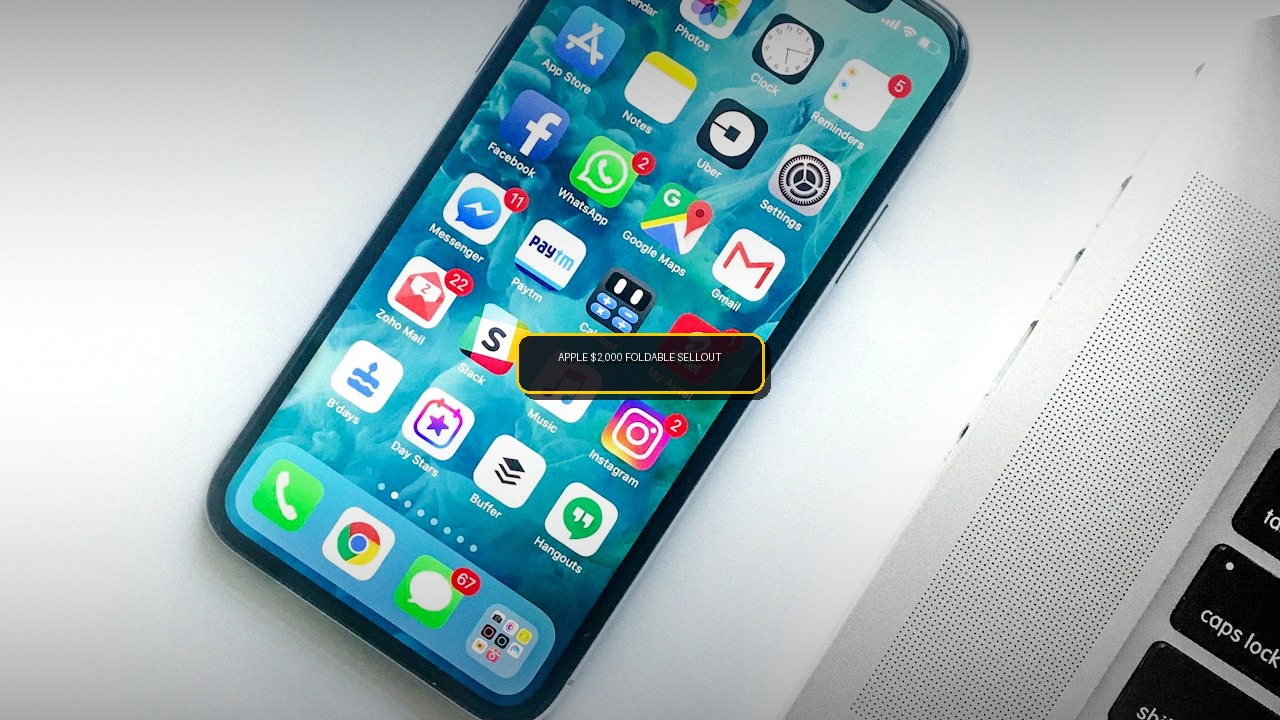
When Apple officially opened pre-orders for its inaugural dual-screen foldable flagship, the iPhone Duo, on October 16, 2026, market skeptics wondered whether consumer appetites would withstand a staggering $1,999 entry price. Within four minutes, that question was unequivocally answered. Across all configurations—from the baseline 256GB edition to the top-tier 2TB ceramic glass build—initial inventory vanished, pushing delivery estimates across North America, Europe, and Asia deep into January and February 2027.
Yet alongside this commercial triumph, an unexpected design controversy has erupted among early adopters and tech commentators: Apple’s official $79 polycarbonate protective case requires owners of a two-thousand-dollar luxury device to literally paste it on with sticky double-sided adhesive strips.
The Three-Minute Evaporation: Luxury Pricing Fails to Deter Foldable Mania
The velocity of the iPhone Duo sellout underscores Apple’s formidable pricing power, even in a mature global smartphone landscape. While competitors such as Samsung, Google, and Huawei have spent six generations conditioning the market to foldable screens, Apple’s late arrival has been treated by consumers as the format’s definitive mainstream coronation.
Retail logistics tracking showed that the premium “Night Sky” finish in 1TB capacity slipped to a ten-week shipping backlog within 180 seconds of the Apple Store app refreshing. Telecom carriers, including Verizon, AT&T, and Vodafone, reported unprecedented server load, with pre-order volumes surpassing the iPhone 15 Pro and 16 Pro launch peaks.
However, supply chain analysts at TF International Securities note that this apparent hyper-demand is also an artifact of conservative initial yields:
- Complex Multi-Link Hinge Mechanisms: The zero-gap titanium hinge, designed to eliminate display creasing without compromising water resistance, has bottlenecked contract manufacturing at Foxconn and Luxshare.
- Ultra-Thin Flexible Glass (UTG): Proprietary stress-relieved glass substrates manufactured under exclusive contracts with Schott and Corning are experiencing yield rates below 62%, limiting Apple’s initial production run to roughly 2.8 million units globally.
Glue on a Two-Thousand-Dollar Glass Jewel: The Engineering Dilemma Behind the $79 Case
The celebratory atmosphere surrounding the launch was abruptly punctured when Apple published the user manual and support documentation for its official $79 iPhone Duo Case. To the bewilderment of early buyers, the case does not clip onto the device via tension or MagSafe alignment alone. Instead, it relies on pre-installed, pressure-sensitive adhesive tape that users must peel and stick directly onto the perimeter chassis.
Comparison of iPhone Duo Official Protection Options:
┌─────────────────────────┬──────────┬─────────────────────────┬─────────────────────────┐
│ Accessory Model         │ Price    │ Attachment Method       │ Primary Consumer Pain   │
├─────────────────────────┼──────────┼─────────────────────────┼─────────────────────────┤
│ Official Duo Case       │ $79      │ Pressure Adhesive Strips│ Cannot swap; residue risk│
│ Folio with Kickstand    │ $129     │ Rare-Earth Magnet Matrix│ Bulky profile; heavy    │
│ Third-Party Bumper      │ $35-$50  │ Friction Corner Clamps  │ Slips off hinge flex    │
└─────────────────────────┴──────────┴─────────────────────────┴─────────────────────────┘
For a company that built its brand equity on seamless industrial design and tactile perfection, asking customers to permanently glue plastic shells onto precision-milled titanium feels jarringly utilitarian. If an owner wishes to clean dust from the hinge seam or switch color accents, removing the case degrades the adhesive backing, necessitating replacement tape packs that Apple plans to sell separately.
Why Foldable Hardware Defies Apple’s Traditional Industrial Design Elegance
The adhesive controversy highlights an immutable physical truth that Apple’s marketing machine cannot bypass: the mechanical reality of foldable form factors. Traditional unibody smartphones allow cases to wrap snugly around four rigid corners, using tension lip grips to stay anchored.
(Responsive / Native Ad)
Foldables, however, lack perimeter rigidity on the inner spine. When the hinge flexes open and closed thousands of times, lateral torque pulls standard clip-on cases off the bezel edges. While Android manufacturers like Samsung and Google have discreetly utilized micro-adhesive strips inside their cases for years, Apple customers expected an ingenious Cupertino-engineered alternative—such as an integrated MagSafe clamping array or sub-millimeter magnetic latches.
While Apple does offer a magnet-based alternative—the $129 Folio with Kickstand—its substantial thickness and 110-gram weight transform a slim 6.9mm folded handset into a hefty brick, alienating users who want minimalist protection.
Supply Chain Strangulation: Why Shipments Are Pushed Deep Into Early 2027
The extended delivery delays reaching into 2027 reveal severe friction in precision assembly. Inside Foxconn’s Zhengzhou facility, the assembly of the iPhone Duo requires 47 distinct calibration steps under robotic microscopy, compared to just 18 for a standard iPhone Pro model.
The primary culprit remains thermal management. Sandwiched inside the thin dual chassis, the customized silicon requires dual vapor-chamber conduits that traverse the central hinge cavity without fatiguing over 400,000 fold cycles. Any minor misalignment during automated ribbon insertion renders the entire unit scrap. Industry insiders predict that Apple will operate under severe supply constraints through Q1 2027, creating a thriving gray market where early allotment units are already commanding resale markups exceeding $3,500 on secondary auction platforms.
The Wider Ripple Effect on Android Foldable Hegemony
Beyond the accessory controversy, the iPhone Duo’s immediate pre-order sweep sends shockwaves through the consumer electronics ecosystem. For years, Android OEMs comforted themselves with the belief that foldables were a niche category with limited appeal to mainstream iOS loyalists.
Apple’s multi-month backlog disproves that hypothesis overnight. Component suppliers for hinge alloys, flexible OLED panels, and miniaturized battery cells are already reporting urgent inquiries from competing smartphone brands attempting to upgrade their hinge tolerances to match Apple’s zero-crease standard. As the holiday shopping quarter approaches, Apple has once again demonstrated that even when it arrives years late to a hardware revolution—and even when its protective accessories require sticky tape—consumer demand for Cupertino’s vision remains virtually unstoppable.