 Hot
Hot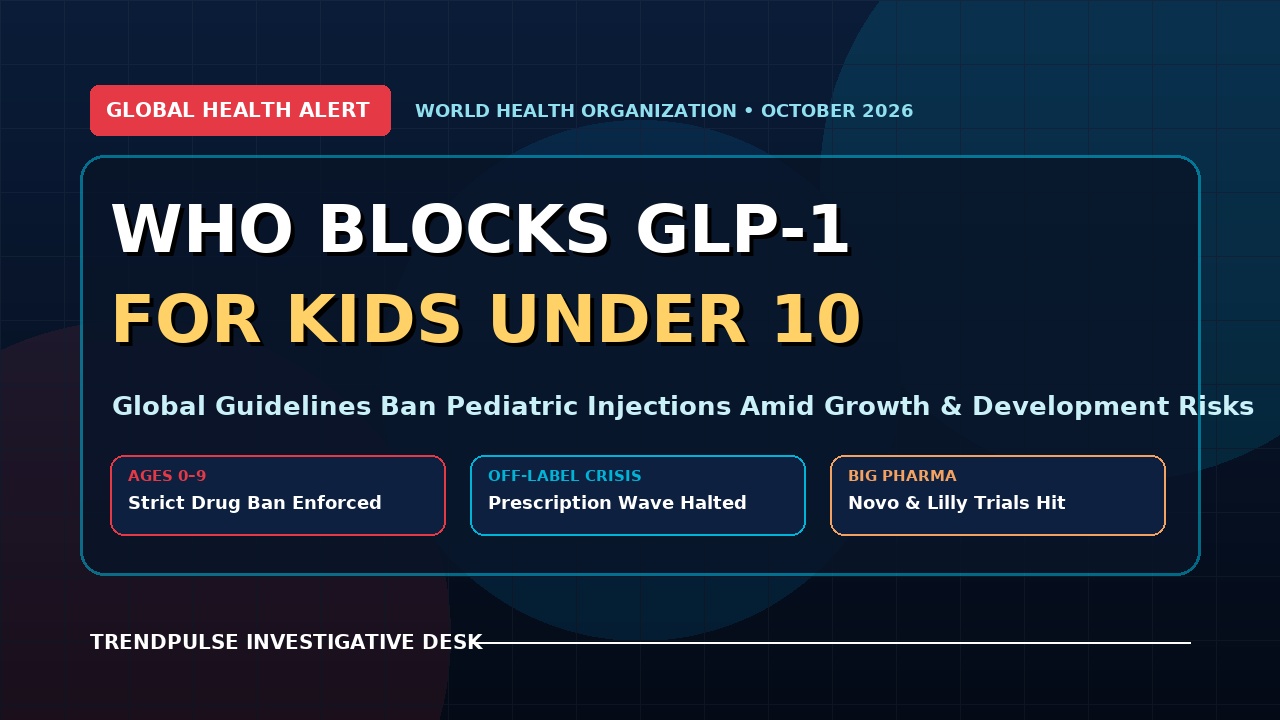
In a decisive intervention that sets the stage for a high-stakes clash between global public health authorities and the pharmaceutical industry, the World Health Organization (WHO) has released its first-ever comprehensive global guidelines on the clinical management of obesity in children and adolescents. Most notably, the Geneva-based agency issued an unequivocal “strong recommendation against” the use of weight-loss medications—explicitly including blockbuster GLP-1 receptor agonists such as semaglutide and tirzepatide—as well as bariatric surgeries and invasive medical devices for children under 10 years of age.
With childhood obesity currently impacting an estimated 170 million young people worldwide, the directive establishes a firm global boundary at a moment when pediatric off-label prescribing has accelerated rapidly across North America, Europe, and private healthcare corridors in emerging markets.
The Biological Unknown: Why Severe Caloric Restriction Risks Stunting Pediatric Brains and Bones
At the heart of the WHO’s prohibitive stance is a severe lack of longitudinal pediatric safety data, coupled with acute physiological risks unique to prepubescent biology. Between birth and age nine, human children undergo rapid cellular replication, organ maturation, skeletal mineralization, and neurodevelopmental remodeling. GLP-1 receptor agonists function by delaying gastric emptying and biochemically dampening central appetite pathways in the hypothalamus, often depressing caloric intake by 25% to 40%.
While appetite suppression provides life-saving metabolic relief for adults with morbid adiposity, applying that caloric deficit to an eight-year-old risks severe nutritional deprivation. WHO advisors cautioned that artificially choking off nutrient absorption during peak growth velocity can induce irreversible deficits in bone mineral density, compromise immune resilience, and alter endocrine signaling pathways governing natural puberty onset. Furthermore, clinical trials have repeatedly demonstrated that GLP-1 therapies induce non-trivial reductions in lean muscle mass alongside adipose tissue—a dynamic that could impair musculoskeletal development in young children whose neuromuscular coordination is still forming.
| Clinical Parameter | WHO Recommendation (Ages 0–9) | WHO Guidance (Adolescents 10–19) | Pharmaceutical Pipeline Ambition |
|---|---|---|---|
| Pharmacotherapy (GLP-1s) | Strongly Recommended Against | Conditional “Last Resort” only | Phase 3 trials ongoing down to age 6 |
| Primary Intervention | Structured family lifestyle & diet | Multi-modal behavioral therapy | Drug-first combination therapy |
| Surgical Interventions | Strictly Forbidden | High-risk, severe comorbidities only | Experimental bariatric protocols |
| Evidence Threshold | Insufficient safety/growth data | Moderate clinical trial evidence | Aggressive pediatric label expansions |
The Off-Label Gold Rush: When Desperate Parents and Med-Spas Bypassed Clinical Caution
The WHO’s intervention arrives not in a clinical vacuum, but as a direct counter-offensive against an escalating off-label prescription wave. While regulatory bodies like the US Food and Drug Administration (FDA) and the European Medicines Agency (EMA) have authorized specific GLP-1 formulations (such as Wegovy) for adolescents aged 12 and older, pediatricians, commercial weight-loss clinics, and med-spas have faced unrelenting demand from parents of younger children struggling with severe childhood obesity.
Surveillance tracking between 2019 and 2026 revealed a staggering rise in off-label GLP-1 prescriptions for children aged 8 to 11. Alarmed by accelerating rates of pediatric hypertension, non-alcoholic fatty liver disease (NAFLD), and early-onset Type 2 diabetes, clinicians had increasingly turned to compounded semaglutide as an ad-hoc chemical safety valve.
By categorizing pharmacological treatments for under-10s as clinically unjustified, the WHO effectively dismantles the medical rationale supporting this off-label prescribing boom, placing clinicians who inject prepubescent children squarely outside global consensus guidelines.
(Responsive / Native Ad)
Big Pharma’s Pediatric Pipeline in Jeopardy: The Commercial and Legal Fallout
The WHO ruling delivers an immediate regulatory and commercial setback to pharmaceutical giants Novo Nordisk and Eli Lilly, both of which have poured billions into clinical trials evaluating GLP-1 therapies in pediatric cohorts as young as six years old. Both drugmakers had viewed early-childhood indications as vital pillars for sustaining astronomical market valuations once patent cliffs on adult formulations loom in the 2030s.
The fallout from the WHO’s hard line will reverberate immediately across four key domains:
- Reimbursement Refusals: National health systems (including the UK’s NHS and European single-payer networks) and private insurance underwriters in the United States now hold an ironclad administrative defense to automatically reject coverage claims for GLP-1 therapies administered to children under 10.
- Litigation & Malpractice Exposure: Private clinics, telehealth platforms, and pediatric practitioners continuing to write off-label scripts for minors now face exponentially heightened legal liability should treated children develop long-term pancreatitis, thyroid tumors, or stunted linear growth.
- FDA and EMA Scrutiny: Regulatory agencies evaluating impending pediatric trial submissions will face intense public scrutiny if they choose to grant pediatric marketing authorizations against explicit WHO warnings.
- Compounding Pharmacy Crackdowns: State medical boards and consumer protection authorities are anticipated to initiate targeted enforcement actions against commercial wellness centers advertising “teen and tween slim-down injections.”
The Societal Crossroads: Treating Food Environments Instead of Injecting Children
The debate now fracturing the medical community exposes a deep philosophical division over modern chronic illness. Critics of the WHO guidelines argue that relying purely on lifestyle and behavioral counseling for childhood obesity has a historical failure rate exceeding 80%, leaving genetically predisposed children exposed to lifetime metabolic cardiovascular devastation.
Yet the WHO’s panel insisted that medicalizing early childhood distracts governments from confronting the structural drivers of the crisis: the unfettered marketing of ultra-processed foods, high-fructose food subsidies, and vanishing physical activity infrastructure. By drawing an unyielding line at age 10, the global health authority has issued a blunt warning to society: chemical appetite suppression cannot become a substitute for fixing the broken food environments that made children sick in the first place.