 Hot
Hot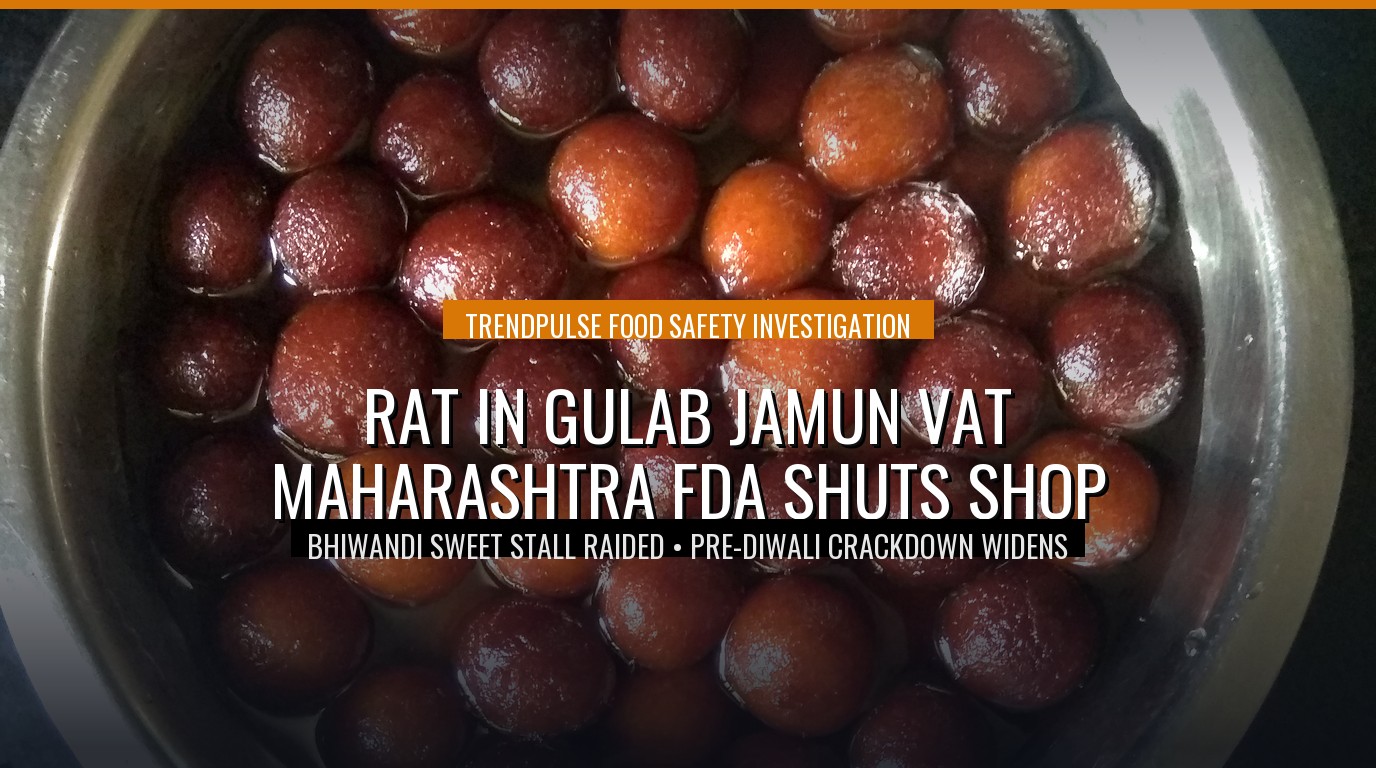
Just weeks before the peak festive rush of Diwali and Dussehra, a stomach-churning 15-second mobile video has triggered nationwide outrage and prompted swift regulatory intervention in Maharashtra. The clip, filmed by a shocked customer and circulated across millions of social media feeds, captured a live black rat actively paddling and struggling inside a massive metal vessel filled with sweet syrup and gulab jamuns at a sweet stall in Bhiwandi, Thane district.
The viral exposure forced the Maharashtra Food and Drug Administration (FDA) to launch an immediate raid on the establishment, culminating in an official stop-business order. Yet behind the viral revulsion lies a far more systemic crisis: the unmonitored shadow supply chains of commercial sweets that flood suburban Indian markets every autumn.
The Viral Clip That Sickened Maharashtra: Inside the Shanti Nagar Inspection
The incident occurred at Harish Gulab Jamun, a commercial stall situated along Naga Road in Bhiwandi’s Shanti Nagar locality. Following public outcry on social media platforms, an emergency inspection team led by Thane Food Safety Officer Praveen Shinde raided the premises to verify the complaint.
While the rodent had been discarded prior to the arrival of the enforcement team, the inspection uncovered a litany of glaring statutory and sanitary violations:
- Absence of FSSAI Registration: The business had been operating without a valid Food Safety and Standards Authority of India (FSSAI) food business registration certificate.
- Missing Source Documentation: The owner could produce zero purchase invoices, transport challans, or batch manifests accounting for the confectionery sold on site.
- Severe Sanitation Breaches: The tiny 5-by-6-foot commercial enclosure lacked basic pest exclusion screens, proper drainage covers, and clean food storage apparatus.
Faced with these prima facie violations, Officer Shinde invoked emergency powers under the Food Safety and Standards Act, 2006, issuing a formal stop-business notice ordering the immediate shuttering of the premises.
The Shadow Sweet Supply Chain: Why Subcontracted Mithai Bypasses Hygiene Audits
Crucially, preliminary FDA inquiries revealed that Harish Gulab Jamun was not actually preparing the confections on site. Operating out of a pocket-sized stall, the proprietor had been purchasing pre-cooked, ready-to-sell batches of gulab jamun from wholesale cottage manufacturing units in the neighboring Kalyan industrial belt.
| Dimension | Standard Licensed Confectionery | Unregulated Suburban Sweet Stall |
|---|---|---|
| Kitchen Standards | Stainless steel vessels, pest-sealed HVAC, daily sanitization | Open-air workshops, corrugated tin roofs, open gutter proximity |
| Traceability | FSSAI QR batch code, expiration and manufacturing timestamps | Loose wholesale tins without manufacturer labels or ingredient audits |
| Regulatory Oversight | Scheduled quarterly inspections, mandatory water testing | Zero baseline inspection prior to viral social media exposure |
| Festive Volume Surge | 2x production with pre-booked cold storage | 5x to 10x production outsourcing to unregulated third-party fryers |
During the festive season, consumer demand for traditional sweets like gulab jamun, barfi, and kaju katli spikes by upwards of 400%. To capitalize on the rush, hundreds of micro-vendors throughout the Mumbai Metropolitan Region (MMR) outsource preparation to unregistered basement kitchens where hygiene standards are virtually non-existent and rodent infestations thrive.
(Responsive / Native Ad)
Leptospirosis and Contamination Realities: What Happens When Rodents Enter Food Prep
Public health epidemiologists warn that rodent contact with cooked confectionery carries severe, life-threatening clinical risks. Rodents are primary vectors for Leptospira bacteria, which cause leptospirosis—an acute infection capable of inducing kidney failure, pulmonary hemorrhage, and liver damage when ingested through food contaminated with rodent urine.
Furthermore, rats harbor Salmonella enterica and Escherichia coli on their fur and paws. Because sugar syrup acts as a nutrient-rich organic medium at ambient room temperatures, bacterial colonization can multiply exponentially within hours, transforming a sweet treat into a potent vector for severe gastroenteritis and foodborne sepsis.
The Maharashtra FDA Crackdown: Can Surprise Raids Fix a Decades-Old Enforcement Deficit?
In the wake of the Bhiwandi closure, Maharashtra FDA authorities have signaled an intensified state-wide pre-Diwali drive targeting sweet makers, wholesale mawa (khoya) depots, and roadside stalls across Thane, Pune, Nashik, and Mumbai.
However, consumer rights advocates emphasize that reactive inspections triggered by viral videos highlight a chronic regulatory shortfall. With fewer than 300 designated food safety officers tasked with monitoring over 400,000 registered and unregistered food establishments across Maharashtra, the ratio of enforcement officers to food vendors exceeds 1:1,300. Until mandatory digital supplier traceability and stringent pre-festival pest control certification are enforced down to the neighborhood stall level, consumers will remain the reluctant front-line inspectors of their own festive plates.