 Hot
Hot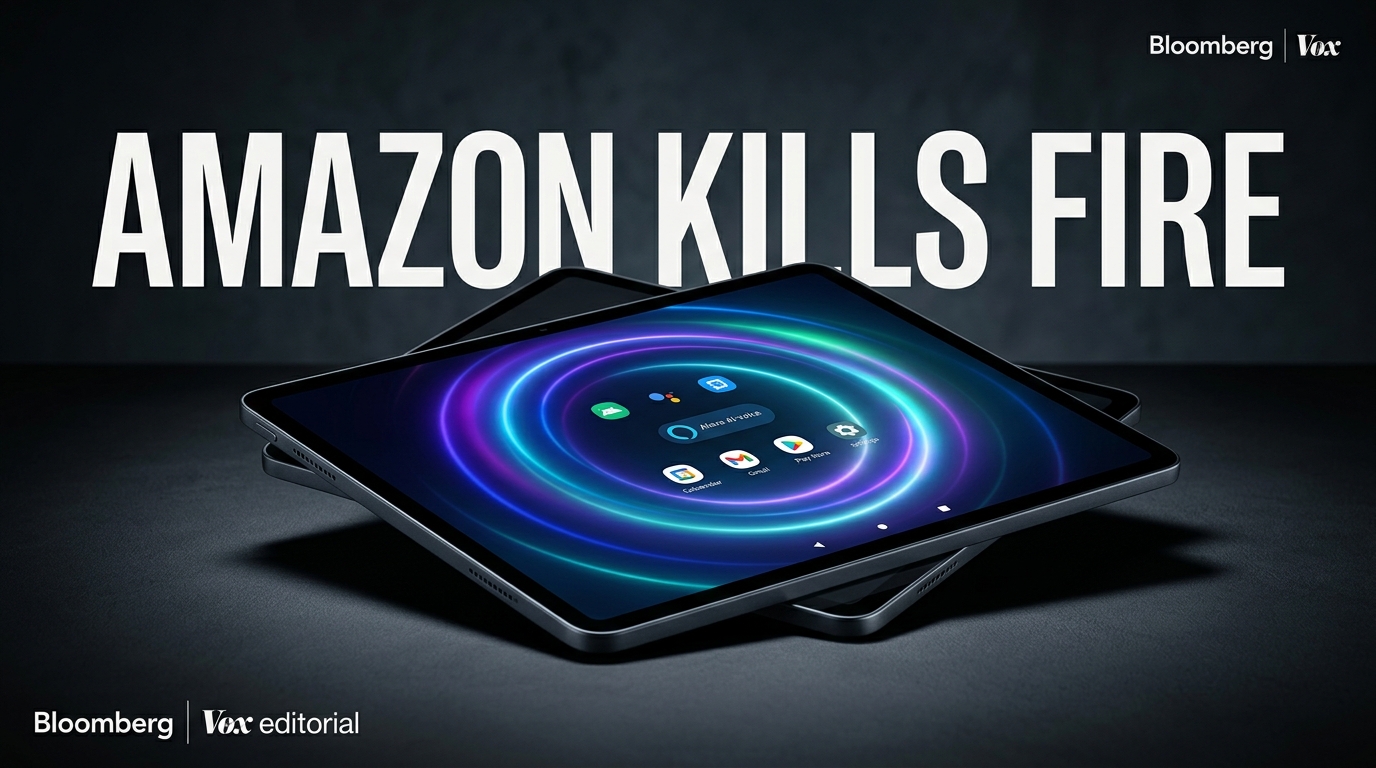
On October 8, 2026, Amazon executed one of the most radical strategic pivots in modern consumer technology, announcing the permanent retirement of its Fire tablet brand after 15 years of dominance in the budget hardware category. In its place, the Seattle tech giant unveiled a new flagship portfolio: the Amazon Alexa Tablet series.
Spanning three distinct models—the Alexa Tablet 8 ($229.99), Alexa Tablet 11 ($379.99), and the top-tier Alexa Tablet 12 Pro ($549.99)—the lineup marks an aggressive departure from Amazon’s traditional sub-$50 loss-leader hardware playbook. More shocking than the price jump, however, is a historic software concession: Amazon has officially abandoned its proprietary Fire OS and the walled Amazon Appstore. The new devices ship with certified Android and out-of-the-box access to the Google Play Store, all deeply integrated around Amazon’s generative Alexa+ AI engine.
Pre-orders opened immediately, with North American shipments commencing on October 14, 2026, followed by European markets on October 19. Existing Fire tablets will continue receiving security maintenance, but production has ceased permanently as warehouses clear out remaining stock.
The Surrender of Fire OS: Why Amazon Finally Embraced the Google Play Store
For over a decade, Amazon’s hardware strategy relied on a strict walled garden. Devices were sold near cost or at a loss, designed to funnel consumers into Prime Video, Kindle books, and retail shopping. But Fire OS came with a crippling Achilles’ heel: the lack of native Google Mobile Services (GMS), which locked millions of users out of YouTube, Google Docs, Gmail, and modern mobile productivity tools. Sideloading the Play Store became a mandatory ritual for power users.
By admitting defeat on Fire OS and licensing Google’s official Android platform, Amazon removes the primary friction that prevented middle-class consumers from choosing Amazon hardware over Apple’s entry-level iPad or Samsung’s Galaxy Tab. Consumers now get unrestricted access to the entire Android app ecosystem, transforming the Alexa Tablet from an oversized e-reader and video player into a genuine work-and-productivity slate.
The $50 Bargain Era Is Over: Unpacking the Pivot to $550 Premium Hardware
Between 2011 and 2025, Amazon flooded living rooms and dorm rooms with plastic, slow, ad-supported $49 Fire 7 tablets. However, internal hardware margins collapsed in recent fiscal quarters as component prices escalated and budget consumer tablets became disposable e-waste.
| Model | Launch Price | Display Specs | Core Focus |
|---|---|---|---|
| Alexa Tablet 8 | $229.99 | 8.0” 1080p IPS, 90Hz | Compact daily reading, smart home command hub |
| Alexa Tablet 11 | $379.99 | 11.2” 2K OLED, 120Hz | Mainstream media streaming, light productivity |
| Alexa Tablet 12 Pro | $549.99 | 12.6” 3K OLED, 120Hz | Apple iPad Air rival, magnetic stylus, multitasking |
With machined aluminum unibodies, high-refresh OLED displays, and high-end processors, Amazon is deliberately deserting the bottom of the market to capture the lucrative $300–$600 tier long monopolized by Apple’s 10th-generation iPad and iPad Air.
Alexa+ as the Trojan Horse: Turning Hardware into a Continuous AI Subscription
The true catalyst for this corporate rebirth is generative artificial intelligence. In early 2026, Amazon previewed Alexa+, a conversational reasoning engine designed to replace the brittle scripted voice assistant of the past decade.
(Responsive / Native Ad)
On the new Alexa Tablets, Alexa+ is not merely an app—it functions as a persistent background operating layer equipped with “On-Screen Intelligence.” By utilizing local and cloud multimodal models, Alexa+ can read documents displayed on screen, summarize video meetings in real time, extract action items from emails, and orchestrate third-party tasks across Android apps without manual user switching.
However, advanced agentic AI requires expensive inference compute. Amazon plans to bundle one year of Alexa+ with the hardware, after which users will transition to a recurring monthly subscription. Hardware is no longer the destination; it is the physical terminal built to anchor households into recurring generative AI service tiers.
Direct Threat to iPad Dominance or Costly Miscalculation? The Industry Standoff
The announcement has triggered fierce debate across Silicon Valley. Wall Street analysts from Morgan Stanley and Wedbush noted that Amazon faces significant consumer perception inertia. For fifteen years, consumers associated Amazon hardware with cheap holiday stocking stuffers. Convincing buyers to spend $549 on an Amazon-branded tablet when Apple’s 11-inch iPad Air sits within striking distance will test the limits of Amazon’s brand equity.
Yet, enterprise device reviewers point out that Amazon’s aggressive integration with Google Play combined with deep smart home ambient intelligence creates a distinct hybrid category that neither Apple nor Google currently dominates: a dedicated, portable household agent that functions equally well as a work tablet, a family command screen, and a voice-driven AI companion.
If Amazon succeeds, the death of the Fire tablet will be remembered not as the end of an era, but as the moment Amazon finally stopped selling cheap screens and began selling the future of ambient computing.