 Hot
Hot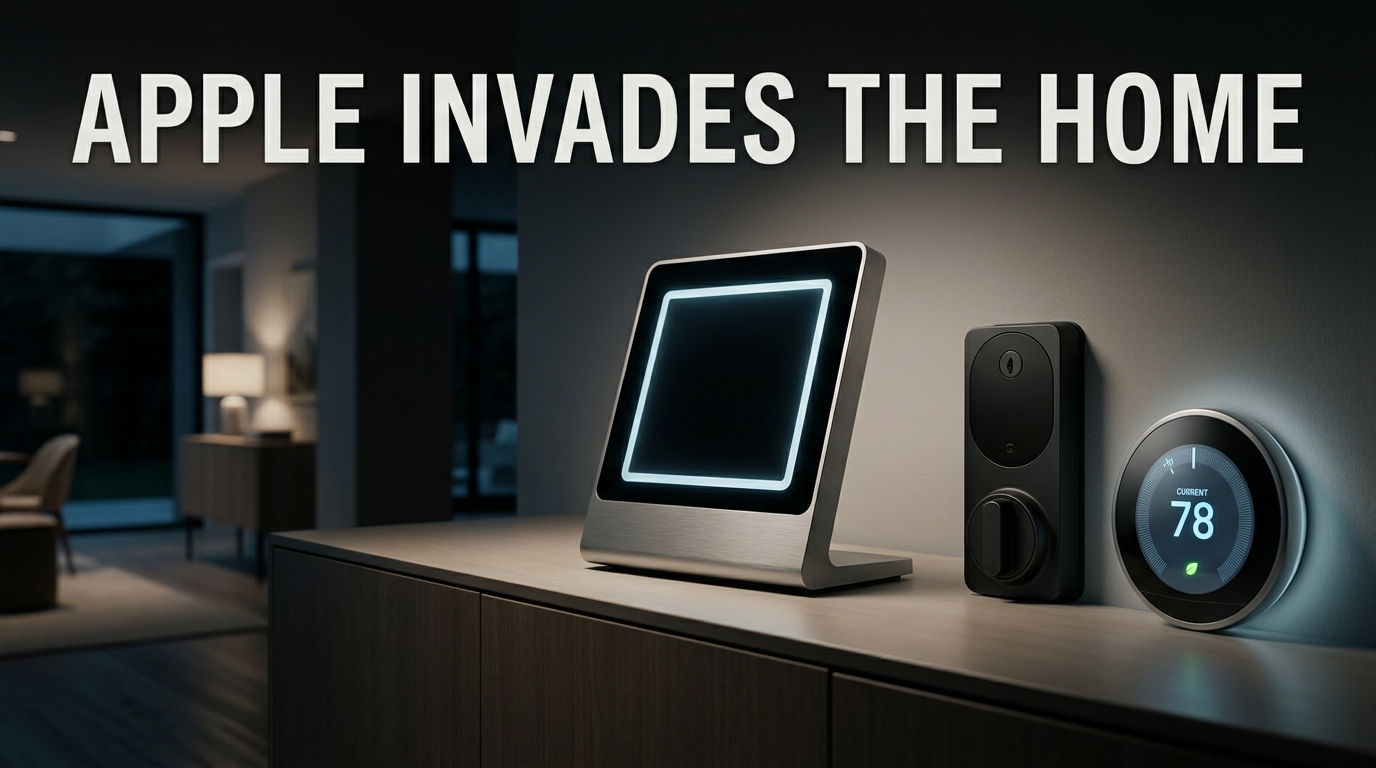
When invitations landed in media inboxes bearing a minimalist glowing doorway graphic and the cryptic tagline “Welcome Home” for October 13, 2026, in New York City, the technology industry realized Apple was finally preparing to break its decade-long hesitation in ambient computing. For nearly twelve years since the unveiling of HomeKit in 2014, Cupertino treated the connected home as an afterthought—a software sandbox relegated to Apple TV hubs and high-end HomePod speakers while Amazon Echo and Google Nest colonized kitchen countertops, doorways, and hallway thermostats across millions of households.
That era of passive detachment has officially ended. The October 13 showcase represents Apple’s most aggressive hardware expansion since the launch of the Vision Pro, led by a dedicated smart home hub running a brand-new operating system dubbed homeOS and backed by an unprecedented, co-developed accessory ecosystem with South Korean manufacturing giant LG Electronics.
| Key Spec & Strategic Dimension | Legacy Apple HomeKit Framework | October 2026 “Welcome Home” Architecture |
|---|---|---|
| Primary Ambient Hardware | Audio-only HomePod / Apple TV 4K | “HomePad” ~6-inch Square Smart Display Hub |
| Form Factor Options | Stationary countertop cylinder | Magnetic wall-mount & iMac G4-inspired dome base |
| Operating System | Modified tvOS / audioOS | Dedicated homeOS with Siri AI & Face ID presence |
| Peripheral Device Strategy | Exclusively third-party licensing | Co-engineered LG portfolio (Lock, Doorbell, Thermostat) |
| Networking Architecture | Wi-Fi / Thread border router | Integrated Apple N1 silicon for zero-latency Thread/Matter |
| Primary Competitors Targeted | Passive resistance to Alexa / Nest | Direct assault on Amazon Echo Show and Google Nest Hub |
Beyond the Screen: Why Apple Abandoned Pure In-House Manufacturing for LG’s Industrial Muscle
The most startling revelation surrounding the “Welcome Home” initiative is not the display hub itself, but Apple’s decision to break its sacred dogma of single-brand vertical integration. Industry supply chain audits confirm Apple has co-engineered an entire suite of frontline smart home hardware—including Ultra-Wideband (UWB) deadbolt locks, 2K HDR video doorbells, smart climate thermostats, and outdoor floodlight cameras—manufactured, branded, and serviced through LG Electronics.
For decades, Steve Jobs and Tim Cook insisted that Apple only enter product categories where it controlled both the primary glass and the precision silicon. However, the economics of commoditized home hardware—HVAC wiring, exterior weatherproofing, strike-plate physical security, and electrician installations—presented logistical nightmares that Apple’s boutique retail structure was never designed to manage. By partnering with LG, Apple secures industrial-grade white-goods reliability, global distribution in big-box home improvement chains, and professional contractor networks without exposing the premium Apple brand to the mundane realities of deadbolt servicing and 24-volt HVAC furnace transformers.
Under the hood, these LG accessories will feature proprietary Apple-certified secure elements, ensuring that live biometric feeds, access keys, and temperature routines remain end-to-end encrypted locally rather than routing through third-party advertising clouds.
The ‘HomePad’ Gambit: Reviving the iMac G4 Spirit to Solve the Smart Display Graveyard
At the center of Cupertino’s renewed offensive is the long-rumored “HomePad”, a hybrid device that bridges the gap between an iPad mini and a HomePod speaker. Designed around a roughly 6-inch squarish Retina panel, the hub is engineered to exist in two distinct configurations: a flat, magnetic wall tile that sits flush against hallway drywalls, and an expressive tabletop console mounted on an angled chrome arm extending from a semi-spherical audio base—an unmistakable visual homage to Jony Ive’s iconic 2002 iMac G4.
Unlike past smart displays that degenerate into glorified digital photo frames and intrusive recipe billboards, Apple’s hub relies on localized presence sensing. Combining a wide-angle camera with micro-radar proximity sensors, the device detects who enters the kitchen or foyer, dynamically transitioning its interface from a low-power clock face into a tailored personal dashboard. If a parent approaches, calendar entries, home security alerts, and work reminders populate the screen; when a child walks in, the interface shifts to parental-approved media controls and school schedules.
Driving this responsiveness is homeOS, paired with next-generation on-device Siri AI. Rather than routing basic commands through remote data centers—a perpetual friction point for Amazon Alexa users—the hub processes natural language queries locally, coordinating lighting scenes, security sweeps, and multi-room audio with imperceptible latency.
(Responsive / Native Ad)
Privacy at the Threshold: The High-Stakes Battle Over Ultra-Wideband Locks and Biometric Doorbells
The strategic timing of Apple’s entry exploits severe vulnerabilities across incumbent smart home platforms. Amazon’s decision to monetize its Echo ecosystem with subscription-tier AI features, combined with persistent privacy scandals surrounding Ring camera footage sharing with law enforcement, has cultivated deep consumer fatigue. Simultaneously, Google’s slow deprecation of legacy Nest integrations has left early smart home adopters frustrated by orphaned hardware and unreliable automations.
Apple is positioning privacy as its primary offensive weapon at the front door. The co-developed LG smart deadbolt leverages Apple’s Ultra-Wideband (UWB) proximity protocol: rather than tapping a phone against a sensor or punching in a numeric code, the deadbolt authenticates a homeowner’s iPhone or Apple Watch inside their pocket, unlocking automatically the instant their foot reaches the welcome mat while rejecting attempts made if the device is held from inside the home.
Similarly, the LG video doorbell processes facial recognition on the local home hub using Apple’s Neural Engine, bypassing cloud video storage subscriptions entirely by archiving encrypted footage directly to private iCloud HomeKit Secure Video storage.
The Amazon and Google Squeeze: How Matter Standardization Left Silicon Valley Vulnerable
When Apple joined Amazon, Google, and Samsung to champion the Matter interoperability standard in 2019, critics assumed Apple was conceding defeat, settling for cross-platform compatibility rather than owning the connected home. The “Welcome Home” rollout reveals the counter-stroke: by commoditizing the underlying connectivity protocols through Matter and Thread, Apple effectively stripped away the moat that protected Amazon’s low-cost hardware advantage.
With hardware connectivity democratized, consumer decision-making reverts back to software polish, hardware aesthetics, and data privacy. By introducing refreshed Apple TV 4K units sporting the A19 processor and HomePod minis powered by the custom N1 networking chip, Apple is turning every living room into an unassailable bastion of ambient computing.
As October 13 approaches, the battle lines for the next decade of domestic technology are drawn. If Apple’s hybrid alliance with LG succeeds, the tech giant will have proven that privacy, elegant industrial design, and tactical partnerships can breach even the most entrenched smart home monopolies.