 Hot
Hot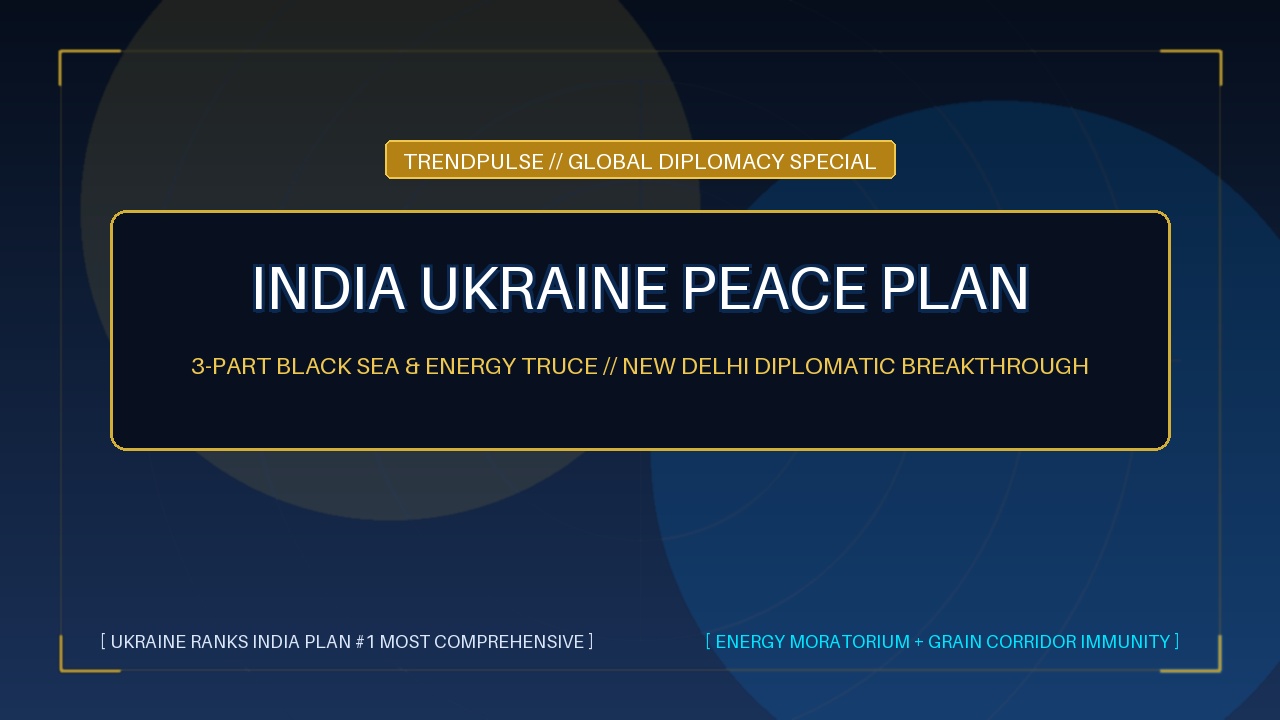
After nearly four years of devastating attritional warfare and stalled multinational peace summits, an unexpected diplomatic breakthrough has begun taking shape—not in Geneva, Vienna, or Washington, but through the quiet corridors of New Delhi. On October 8, 2026, diplomatic disclosures in Kyiv and Moscow confirmed that India has tabled a structured, three-part de-escalation framework aimed at halting critical infrastructure strikes and restoring maritime security across the Black Sea basin.
Speaking on the initiative, External Affairs Minister S. Jaishankar declared that India has officially moved “beyond general advocacy” and is now actively engaged in technical, direct discussions with leadership in both capitals. In Kyiv, Ukrainian Foreign Minister Andrii Sybiha delivered a striking assessment, publicly labeling the Indian initiative as the “most comprehensive” among four competing ceasefire drafts submitted by international powers—eclipsing narrower proposals presented by the United States, Turkey, and Egypt.
| Peace Proposal Comparative Matrix (Submitted to Kyiv, Oct 2026) | Scope of Protections & Diplomatic Sponsorship |
|---|---|
| India (New Delhi Framework) | 3 Pillars: Energy grid ceasefire + Full Black Sea commodity corridor (grain, crude, LNG) + Merchant vessel non-attack immunity |
| United States Proposal | Narrow focus on mutual energy and power grid strikes; excludes maritime shipping protections |
| Turkey (Ankara Proposal) | Focused strictly on Black Sea agricultural grain corridors; omits energy and refinery protections |
| Egypt (Cairo Proposal) | Centered on food security and agricultural grain export safety to North Africa |
| Ukrainian FM Assessment | Rated India’s blueprint as the “most comprehensive and actionable” framework received |
| Kremlin Reception | Welcomed by Moscow; Vladimir Putin cited Prime Minister Narendra Modi’s constructive role |
Beyond Rhetoric: The Three Pillars of New Delhi’s Black Sea and Energy Truce
Unlike prior multilateral summits that attempted to solve the intractable question of sovereign territorial boundaries in one stroke, India’s blueprint is rooted in pragmatic, humanitarian realpolitik. It breaks de-escalation into three targeted, verifiable commitments:
- A Reciprocal Moratorium on Critical Energy Infrastructure: Both belligerents immediately cease missile and drone bombardments against civilian power grids, nuclear facilities, sub-stations, and oil refineries ahead of the freezing European winter.
- Uninterrupted Flow of Essential Global Commodities: Guarantees unrestricted passage through Black Sea maritime straits for agricultural grain, fertilizers, crude oil, liquefied natural gas (LNG), and liquefied petroleum gas (LPG).
- Ironclad Protection for Commercial Fleets: Complete immunity from naval drone, mine, and missile targeting for merchant cargo vessels and civilian seafaring crews traversing international waters.
By decoupling immediate civilian survival mechanisms from ultimate territorial negotiations, New Delhi’s framework offers both capitals an off-ramp from mutual economic devastation without forcing either side into ideological capitulation.
The Sybiha Endorsement: Why Kyiv Ranks India’s Blueprint Above Washington and Ankara
The Ukrainian Foreign Ministry’s enthusiastic reception of India’s plan highlights the exhaustion of Western-dominated diplomatic formats. Washington’s proposal remained limited to an “energy ceasefire,” largely designed to suppress global energy volatility ahead of domestic U.S. elections. Meanwhile, Turkish and Egyptian efforts remained single-issue initiatives tailored strictly to grain exports.
“India is the only global actor that has presented an integrated ecosystem that protects our lights, our heat, and our maritime lifeline simultaneously,” noted a senior Ukrainian diplomatic source in Kyiv. “Minister Jaishankar’s plan connects the survival of Ukraine’s winter electricity grid directly to the restoration of global maritime grain logistics.”
Russian President Vladimir Putin has also signaled readiness to engage with Prime Minister Narendra Modi’s proposals, observing that New Delhi’s historic neutrality and refusal to join Western economic sanctions make it a credible, balanced intermediary.
The Oil-and-Wheat Paradox: How India’s Non-Aligned Trade Created Diplomatic Leverage
In the early months of the conflict, Western capitals repeatedly criticized New Delhi for dramatically expanding its purchases of discounted Russian seaborne crude. Today, that economic bridge has become the very foundation of India’s diplomatic clout.
(Responsive / Native Ad)
Because India remained Russia’s largest crude customer while simultaneously maintaining robust intelligence and development partnerships with Kyiv and the West, New Delhi holds unique leverage that neither NATO members nor Beijing possess. India possesses the commercial clout to tell Moscow that continued strikes on Black Sea shipping hurt Global South energy security, while holding sufficient credibility in Kyiv to guarantee that technical maritime terms will be respected.
Global South Realpolitik: The Shifting Balance of Wartime Arbitration
The rise of the New Delhi framework signals a profound tectonic shift in international relations: the transition of Global South powers from passive bystanders to proactive architects of European security architecture. For decades, peace agreements in eastern Europe were brokered under Western or European Union auspices.
Today, as multilateral institutions like the United Nations remain paralyzed by Security Council vetoes, non-aligned powers with heavy trade exposure are filling the diplomatic vacuum. India’s intervention proves that countries outside the traditional transatlantic security bloc are no longer merely absorbing the collateral damage of global food and fertilizer inflation—they are dictating the terms of stability.
Winter Grid Peril vs. Frontline Escalation: The Obstacles Facing Immediate Enforcement
Formidable challenges remain before ink meets paper. Ukrainian defense planners remain wary that an energy strike moratorium could allow Russian logistics units to rearm without fear of retaliatory strikes on rear-guard oil depots. Simultaneously, hardline factions in Moscow question whether maritime corridors in the Black Sea could be exploited for covert military resupply.
Yet with the looming winter threatening to plunge millions of Ukrainian civilians into sub-zero blackouts, and escalating drone strikes disrupting commercial shipping through the Danube and Odesa, the cost of inaction is catastrophic. If Jaishankar and New Delhi can shepherd this 3-part blueprint into a formalized protocol, it will mark the most significant humanitarian and diplomatic breakthrough since the outbreak of hostilities.