 Hot
Hot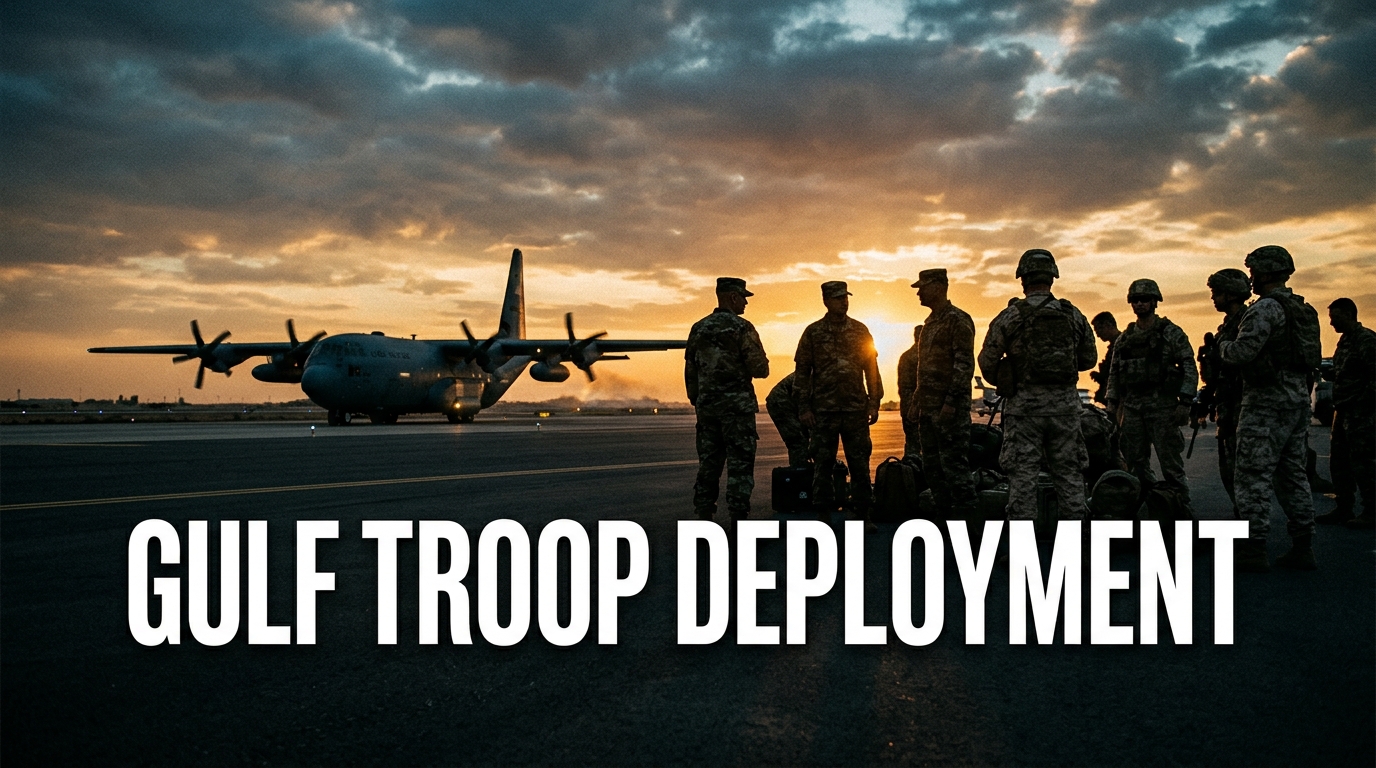
On October 8, 2026, Pakistan confirmed the rapid deployment of military assets and specialized armed forces personnel to the Kingdom of Saudi Arabia, putting into operational effect the mutual assistance clauses of the trilateral “Makkah Alliance for Defence” established alongside Saudi Arabia and Turkey in August 2026.
The military mobilization follows an urgent closed-door summit of the Strategic Political and Defence Committee convened in Riyadh on October 5, precipitated by a barrage of Houthi drone and missile strikes targeting King Khalid International Airport and critical infrastructure in the Saudi capital.
While Defense Minister Khawaja Asif insisted that deployed Pakistani battalions will occupy strictly “defensive, reconnaissance, and technical air-defense support” positions, the government admitted that the decision bypassed Pakistan’s National Assembly entirely. The unilateral deployment has triggered an immediate constitutional firestorm in Islamabad, shattering a decade-long policy of parliamentary oversight regarding foreign military entanglements.
The Ghost of 2015: How Munir Overruled a Decade of Parliamentary Neutrality
The bypass marks a stark historical divergence from April 2015. Eleven years ago, when Riyadh made an urgent appeal for Pakistani soldiers and fighter jets to join the military coalition intervening in Yemen, Pakistan’s Parliament convened in a historic five-day joint session and voted unanimously to remain neutral, resisting fierce Gulf pressure. That decision was celebrated across Pakistan’s civil society as a landmark assertion of civilian sovereignty and non-alignment in sectarian proxy wars.
In 2026, that constitutional restraint has dissolved. Under Field Marshal Asim Munir, whose tenure over all military service branches was constitutionally extended until 2030 under sweeping legislative amendments passed last year, decision-making on external military posture has reconsolidated entirely within General Headquarters (GHQ) in Rawalpindi.
Opposition lawmakers across the political spectrum—including members of the Sunni Ittehad Council and independent parliamentarians—have condemned the deployment as an unconstitutional overreach, asserting that committing state troops to foreign conflict zones without parliamentary debate violates Article 245 of the 1973 Constitution.
| Feature | 2015 Yemen Crisis Stance | 2026 Makkah Alliance Deployment |
|---|---|---|
| Parliamentary Role | 5-day joint parliamentary debate & unanimous neutrality vote | Bypassed completely; cited as executive “operational confidentiality” |
| Institutional Command | Civilian consensus led by Nawaz Sharif cabinet | Centralized under Field Marshal Asim Munir (GHQ mandate) |
| Treaty Framework | Ad-hoc bilateral military assistance request | Formalized trilateral mutual defense pact (Pakistan-Saudi-Turkey) |
| Stated Mission Scope | Active offensive coalition combat roles | Air defense technical monitoring, drone interception, radar telemetry |
The Makkah Alliance Activated: Trilateral Defense Pacts Put to the Test Under Fire
The rapid dispatch of troops provides the first operational stress-test for the Makkah Alliance for Defence. Finalized in August 2026, the pact was envisioned as an Islamic collective security architecture connecting Turkish aerospace and unmanned aerial systems, Pakistani ground expertise and nuclear-backed deterrence, and Saudi Arabia’s immense capital and strategic geography.
With Houthi rebels in Yemen significantly upgrading their missile guidance systems and loitering munitions—disrupting international aviation routes across the Gulf—Riyadh pressed for immediate allied activation. Turkish military technical advisors and radar operators have already reinforced Saudi border garrisons in Jizan and Najran.
Pakistan’s contribution includes electronic warfare units, specialized commandos, and surface-to-air missile battery operators tasked with bolstering perimeter security around critical oil infrastructure and Riyadh air corridors.
(Responsive / Native Ad)
Economic Hostage or Strategic Muscle? The Unspoken Financial Calculus
Behind the diplomatic rhetoric of fraternal solidarity lies Pakistan’s crushing economic reality. Facing severe foreign exchange reserve shortages and a continuous reliance on IMF loan tranches, Islamabad remains structurally dependent on Riyadh’s financial lifeline.
Saudi Arabia currently holds over $5 billion in deferred oil facilities and central bank rollover deposits in the State Bank of Pakistan. Economists in Karachi note that Pakistan’s civilian leadership simply lacked the geopolitical leverage to decline Riyadh’s request for military reinforcements.
By answering the call, Islamabad secures crucial macroeconomic guarantees, energy supplies on deferred credit, and bilateral investments promised under the Special Investment Facilitation Council (SIFC). Yet critics warn that using the national military as economic collateral sets a dangerous precedent that undermines long-term foreign policy autonomy.
The Iranian Border Tinderbox: Geopolitical Risks Looming Over Balochistan
The most perilous consequence of the deployment lies directly west along the 909-kilometer Iran-Pakistan border. Tehran has long eyed the burgeoning Saudi-Pakistani-Turkish trilateral axis with deep suspicion, viewing it as an adversarial Sunni security encirclement.
With Pakistani forces now actively aiding Saudi defense systems against Tehran-aligned Houthi forces, diplomatic ties between Islamabad and Tehran face intense strain. Retaliatory friction could quickly spill over into the restive borderlands of Balochistan, where cross-border militant sanctuaries and proxy skirmishes have historically flared up during periods of Middle Eastern crisis.
As the first Pakistani transport aircraft touch down at King Khalid airbases, the military establishment finds itself walking an excruciating diplomatic tightrope: fulfilling high-stakes security obligations in the Gulf while struggling to contain domestic constitutional backlash and volatile regional blowback.