 Hot
Hot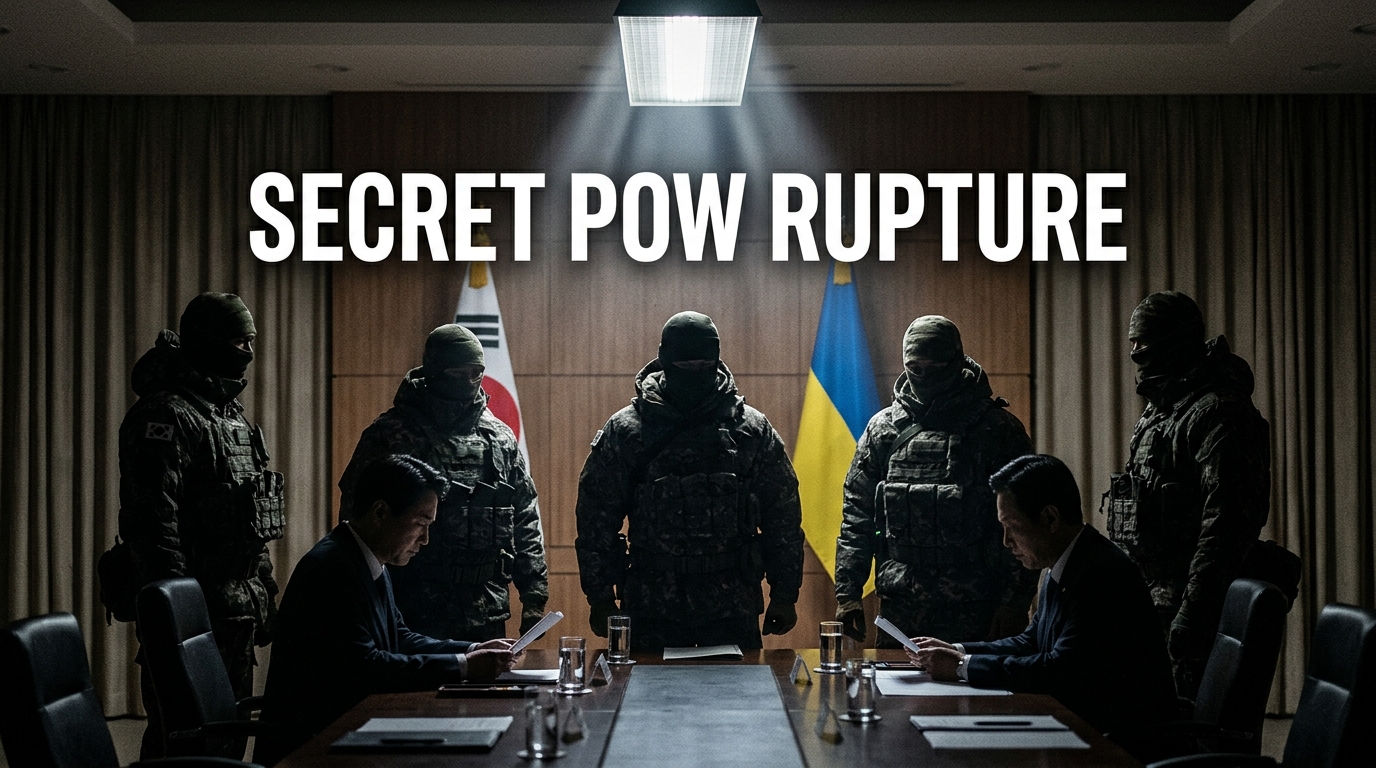
In an extraordinary diplomatic rupture between two democracies ostensibly united against authoritarian aggression, the South Korean Ministry of Foreign Affairs on October 8, 2026, officially ordered the immediate recall of its ambassador to Ukraine, Park Hee-chang. The dramatic withdrawal stems from what officials in Seoul characterize as a catastrophic breach of international trust: Ukrainian President Volodymyr Zelenskyy’s unilateral decision to expose a top-secret intelligence operation involving the transfer of captured North Korean prisoners of war (POWs).
What began as a sensitive humanitarian rescue orchestrated across three continents has devolved into an acrimonious geopolitical standoff, threatening to derail billions of dollars in South Korean reconstruction aid and imperiling vital munitions supply chains that sustain Ukrainian artillery on the eastern front.
| Dimension & Verification Data | Secret Bilateral Agreement | The Public Exposure & Diplomatic Fallout |
|---|---|---|
| Underlying Intelligence Operation | Clandestine extraction of 2 North Korean POWs captured in Kursk (early 2025) | Exfiltration completed covertly to Seoul in September 2026 |
| Bilateral Security Protocol | Strict, signed Non-Disclosure Agreement (NDA) to protect defectors’ kin | Unilaterally revealed by Volodymyr Zelenskyy at UN General Assembly (Sept 23) |
| Official Diplomatic Retaliation | Seoul demanded formal state apology & full accountability review | Ambassador Park Hee-chang recalled to Seoul on October 8, 2026 |
| Kyiv Response & Stance | Ukrainian Presidential Office dismissed NDA as “strange” | FM Andrii Sybiha downplayed incident as “diplomatic misunderstanding” |
| Humanitarian Risk | Absolute secrecy required to prevent Pyongyang retribution | Immediate threat of public executions or gulag internments for relatives |
| Strategic Leverage at Stake | South Korean 155mm indirect artillery pipeline & post-war aid | Threat of Seoul withholding reconstruction contracts and military vetting |
The UN Podium Betrayal: How a Clandestine Defection Became a Geopolitical Spectacle
The roots of the crisis trace back to early 2025, when Ukrainian assault brigades in Russia’s western Kursk region captured two young North Korean soldiers—conscripts dispatched by Kim Jong Un as part of Pyongyang’s expanded troop deployment supporting the Russian Federation. Recognizing their unique legal and constitutional status under South Korean law (which regards all citizens of the Korean Peninsula as nationals of the Republic of Korea), Seoul’s National Intelligence Service (NIS) initiated quiet backchannel negotiations with Kyiv.
By September 2026, the two soldiers were secretly escorted out of Ukraine and resettled in Seoul under total operational secrecy. The transfer was governed by an ironclad Non-Disclosure Agreement (NDA) personally signed by high-ranking intelligence emissaries from both nations. The agreement was rooted in a grim, indisputable reality: public disclosure would instantly sign the death warrants of the soldiers’ parents, siblings, and extended relatives remaining inside North Korea.
Yet, on September 23, 2026, addressing the United Nations General Assembly in New York, President Zelenskyy discarded the pact. Seeking to dramatize North Korea’s direct military entanglement and shame Moscow before the international community, Zelenskyy publicly announced from the podium that Ukraine had captured North Korean combatants and successfully handed them over to South Korea. The revelation stunned diplomats in Seoul, who watched in horror as months of meticulous intelligence work were reduced to a rhetorical soundbite.
Hostages by Blood: The Chilling Price North Korean Families Pay for Public Exposure
Inside South Korea’s security establishment, the reaction has been one of incandescent fury. North Korea’s Ministry of State Security operates a notorious doctrine of collective punishment known as yeonjwaje (family guilt by association). Under Kim Jong Un’s penal code, a soldier who surrenders or defects to the South condemns up to three generations of their family to either summary public execution or lifetime hard labor in kwalliso (political penal colonies) such as Camp 14 or Camp 16.
By publicly broadcasting the transfer to the entire planet, Kyiv eliminated any plausible deniability the captured men possessed. Russian military commanders could no longer list them as “missing in action” or “killed in artillery strikes.”
South Korean President Lee Jae Myung made Seoul’s moral outrage clear, expressing “deep regret” and warning that South Korea would pursue “unspecified punitive measures” if Ukraine continued to deny the agreement. When Ukrainian Foreign Minister Andrii Sybiha brushed off the incident as a mere “diplomatic misunderstanding” while presidential aides in Kyiv termed secrecy “strange,” the South Korean government concluded that nothing short of recalling its top diplomat could communicate the gravity of the offense.
(Responsive / Native Ad)
The Artillery Dilemma: Will Seoul Sever Kyiv’s Vital 155mm Shell Supply Line?
The diplomatic rupture carries profound military ramifications for Ukraine’s war effort. While South Korean domestic law prohibits direct lethal weapons exports to active conflict zones, Seoul has functioned as the indispensable linchpin of Ukraine’s artillery sustainment through complex “backfill” agreements with the United States. Over the past two years, South Korea has transferred over 500,000 rounds of 155mm artillery shells to the U.S. military, enabling Washington to draw down its European stockpiles and rush munitions to the frontlines of the Donbas.
Additionally, South Korean defense titans—including Hanwha Aerospace, Hyundai Rotem, and LIG Nex1—have been negotiating massive reconstruction agreements to rebuild Ukraine’s damaged electrical grid, rail infrastructure, and defense manufacturing facilities.
Inside the National Assembly in Seoul, conservative lawmakers and opposition figures alike are now demanding that the administration halt technical consultations, suspend credit guarantees for Ukrainian post-war projects, and place third-party munitions transfers under intensive parliamentary review. If South Korea slows down shell production or demands stricter end-user auditing, Ukrainian artillery batteries will feel the deficit within weeks.
The Defector Pipeline in Jeopardy: Why Future Captured Soldiers May Refuse Surrender
Perhaps the most damaging, irreversible consequence of Zelenskyy’s disclosure is its impact on the frontline behavior of North Korean troops still deployed across Russian staging grounds. Western intelligence estimates that thousands of North Korean soldiers remain stationed along logistical hubs in western Russia, many of whom suffer from malnutrition, brutal discipline, and minimal ideological commitment.
Prior to the scandal, South Korean psy-ops and Ukrainian frontline broadcasts had been preparing surrender pamphlets promising safe haven, asylum, and discreet relocation to Seoul without retaliation against families back home. That psychological weapon has now been neutralized.
Kim Jong Un’s political commissars in Kursk are already using Zelenskyy’s UN speech as proof that surrender to Ukrainian forces leads directly to exposure and the destruction of one’s family. Far from demonstrating diplomatic savvy, Ukraine’s impulse to score a short-term public relations victory at the UN has compromised human lives, alienated an indispensable industrial ally, and made the prospect of future North Korean defections nearly impossible.