 Hot
Hot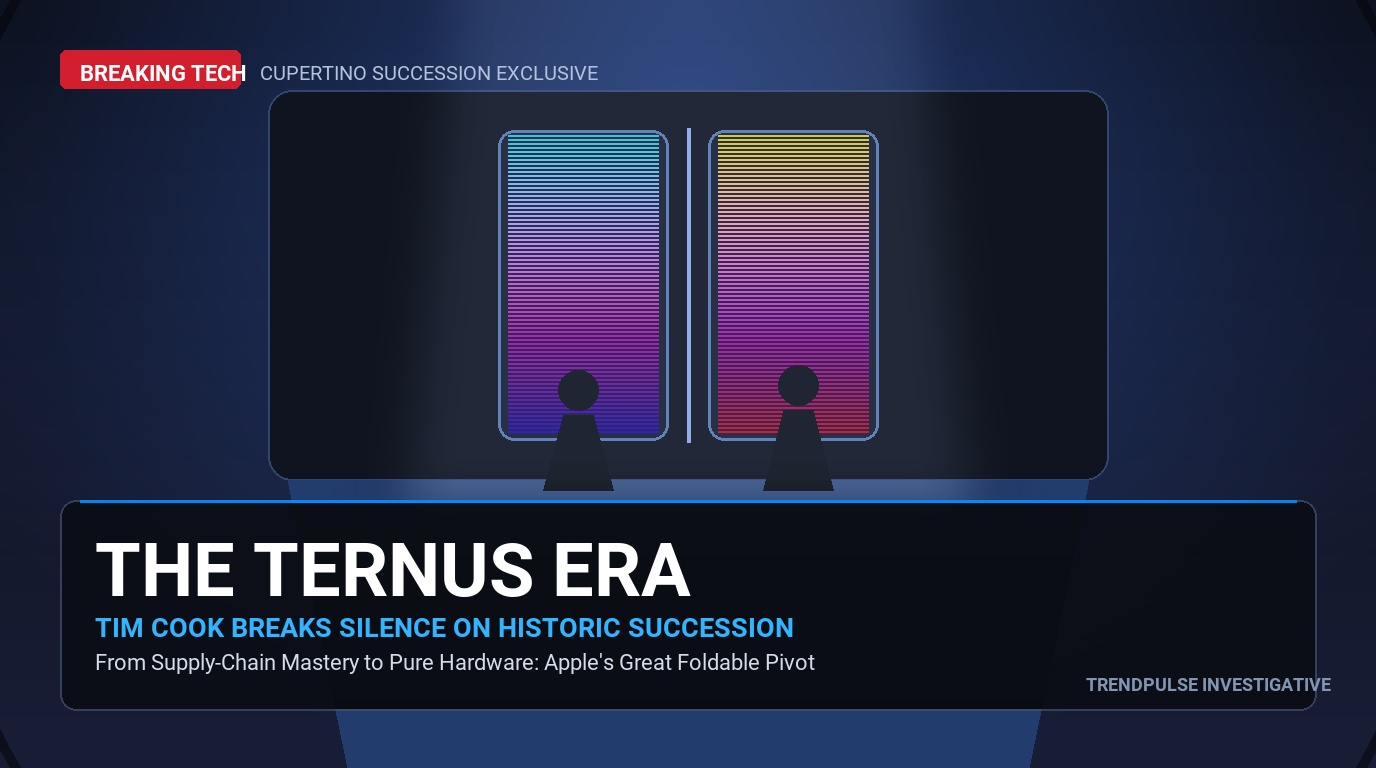
When Tim Cook officially handed the chief executive reins of Apple Inc. to longtime hardware engineering chief John Ternus on September 1, 2026, Silicon Valley braced for an earthquake that never quite registered on the seismograph. Instead of abrupt boardroom drama, Cook slipped into the newly minted post of Executive Chairman with customary southern discretion. Now, five weeks into the most consequential corporate transition of the decade, Cook has broken his public silence in an interview with The Independent, addressing the elephant lurking in the circular corridors of Apple Park: how does a corporate titan who oversaw a $3 trillion valuation expansion step aside without meddling in his successor’s kitchen?
“I am not meddling,” Cook asserted bluntly, addressing concerns that have plagued tech power transitions from Microsoft to Disney. “We have an incredible level of trust. My focus now is on worldwide policy and our relationships with governments—areas where I can take enormous regulatory and political weight off John’s shoulders so he can do what he does better than anyone else on Earth: build transcendent products.”
The “Textbook Succession”: Why Cook Timed His Exit Exactly Ahead of the Foldable Era
Corporate departures in big tech are notorious for their messy timing, often triggered by antitrust bruising, financial downturns, or sudden health emergencies. Cook’s departure, by contrast, was engineered down to the millisecond. By stepping down just eight days before Apple’s blockbuster September 9 keynote—where Ternus formally unveiled the iPhone Duo, Apple’s long-anticipated $1,899 dual-screen foldable flagship—Cook deliberately gifted his successor immediate institutional momentum.
| Apple Transition Metric | Tim Cook Era (2011–2026) | John Ternus Era (2026–Present) |
|---|---|---|
| Primary Executive DNA | Operations, Global Logistics, Margin Expansion | Hardware Architecture, Mechanical Design, Silicon Integration |
| Flagship Hardware Bet | Apple Watch, AirPods, Vision Pro | iPhone Duo (Foldable OLED), Ambient AI Hardware |
| Operational Counterweight | Luca Maestri (Finance), Jeff Williams (COO) | Kevan Parekh (CFO), Sabih Khan (COO) |
| Top Geopolitical Challenge | Tariffs, China Supply Decoupling | Global Antitrust, EU Digital Markets Act, AI Sovereignty |
Insiders confirm Cook refused to be the face of the foldable device launch. Rather than taking a victory lap for a form factor seven years in development, Cook insisted that Ternus own the introduction of the 7.6-inch inward-folding OLED canvas and the accompanying A20 Pro silicon. The message to Wall Street was crystalline: Ternus is not merely preserving Cook’s empire; he is initiating Apple’s next physical architecture.
“Make It Your Own Job”: Banishing the Steve Jobs Ghost from Cupertino
When Steve Jobs transferred command to Cook on August 24, 2011, his parting injunction was legendary: “Don’t ask what I would do. Just do what’s right.” That single piece of advice liberated Cook from playing an impossible imitation game.
Speaking this week, Cook revealed he passed the exact same mandate down to Ternus:
“I told John the exact same thing Steve told me: ‘Make it your own job.’ If John spent five seconds wondering how Tim Cook would conduct a meeting or evaluate an industrial design prototype, Apple would stumble. John’s strength is his technical rigor and his visceral understanding of consumer hardware. He needs to run Apple through John Ternus’s eyes.”
This psychological clearance was critical. Ternus, 51, who spearheaded the transition to Apple Silicon (M-series chips) and oversaw every major iPad and Mac overhaul since 2020, represents the return of an engineer-in-chief to Apple’s helm. Where Cook was a master chess player of multi-tiered Asian supply chains and inventory cycles, Ternus is an obsessive product tinkerer who made his name resolving millimeter-thin thermal constraints.
Dividing the Crown: Why Kevan Parekh and Sabih Khan Now Hold the Operating Levers
The real architectural brilliance of Cook’s exit strategy lies in Apple’s deliberate triangular power redistribution. Recognizing that Ternus could easily drown in the fiscal and logistical minutiae that Cook handled instinctively, Apple completed a synchronized executive realignment:
(Responsive / Native Ad)
- Kevan Parekh as Chief Financial Officer: Elevating the seasoned financial strategist to manage capital allocation, share buybacks, and investor diplomacy.
- Sabih Khan as Chief Operating Officer: Handing Cook’s former supply-chain apparatus to the executive who orchestrated Apple’s manufacturing diversification across India and Vietnam.
- John Ternus as Chief Executive Officer: Freeing the CEO to focus almost exclusively on product pipeline velocity, industrial design, and system software cohesion.
By shielding Ternus from Wall Street earnings calls and factory floor logistics, Apple has created an environment where the CEO can spend afternoons in the design studio alongside Richard Howarth and Alan Dye—an operational dynamic Cupertino has not seen since the peak collaboration between Jobs and Jony Ive.
From Supply-Chain Prudence to Hardware Bravado: The Cultural Reorientation Under Ternus
The cultural ripple effects inside Apple are already palpable. Under Cook’s final years, Apple faced critique from creative purists who argued the company had grown overly iterative—prioritizing services revenue, recurring subscriptions, and incremental camera upgrades over radical product leaps.
Ternus’s immediate authorization of the iPhone Duo, with its complex titanium dual-pivot hinge and dynamic Split View multitasking, signals a willingness to take hardware risks. Early supply chain reports indicate Ternus has already accelerated development timelines for Apple’s augmented reality smart glasses and localized agentic AI chips, overruling the cautious margin-first calculus that characterized the late Cook era.
Pre-orders for the iPhone Duo open on October 16, with retail delivery on October 23. The hardware industry view is unanimous: if the foldable phone re-ignites high-end upgrade supercycles, Ternus will have validated his mandate within his first 60 days.
The Executive Chairman Trap: Can Cook Truly Resist the Urge to Shadow-Govern?
Corporate history is littered with Executive Chairmen who claimed they would not meddle, only to paralyze their successors from behind closed doors—witness Bob Iger’s friction with Bob Chapek at Disney or Bill Gates hovering over Steve Ballmer in early-2000s Redmond.
Cook’s chosen territory, however, is deliberately external. With the European Union aggressively targeting Apple under the Digital Markets Act, the US Department of Justice prosecuting landmark antitrust lawsuits, and trade tensions lingering over chip fabrication in Taiwan, Cook’s transition transforms him into Apple’s Secretary of State.
By locking himself in closed-door diplomacy with prime ministers, trade ministers, and regulatory commissioners across Washington, Brussels, and New Delhi, Cook absorbs the political shrapnel. That leaves John Ternus with a clean, unencumbered canvas to build Apple’s future. For now, the transition stands as a masterclass in corporate choreography—provided the man who built modern Apple can maintain his self-imposed discipline to never touch the steering wheel again.