 Hot
Hot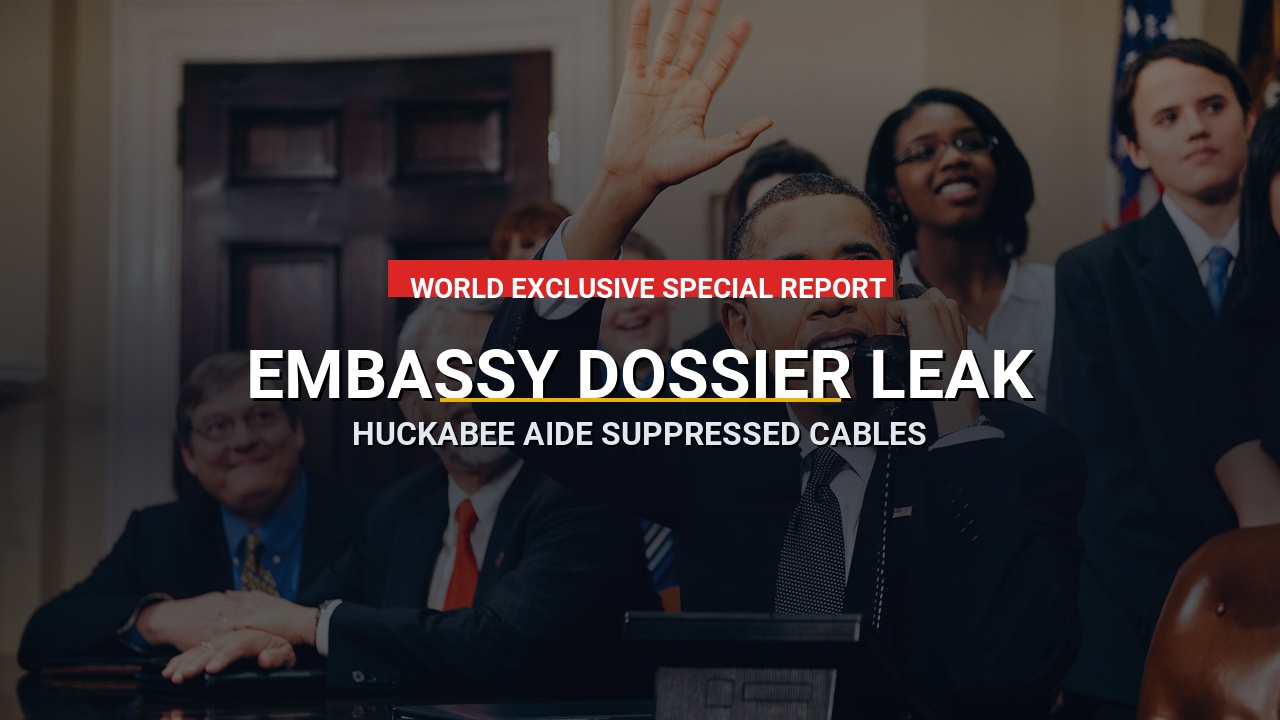
An investigative report published by The New York Times has ignited a fierce diplomatic firestorm across Washington and Jerusalem, alleging that David Milstein, the chief senior adviser to U.S. Ambassador to Israel Mike Huckabee, has systematically suppressed, altered, and blocked internal diplomatic cables to shield the government of Israeli Prime Minister Benjamin Netanyahu from scrutiny.
Citing on-the-record disclosures and corroborating testimony from 15 current and former U.S. officials alongside leaked State Department communications, the investigation exposes an unprecedented breakdown in the integrity of American overseas reporting. Since assuming his post in April 2025, Milstein reportedly established an ideological bottleneck inside the U.S. Embassy in Jerusalem, burying factual reporting on West Bank annexation plans, escalating settler violence, and even formal investigations into the killings of American citizens.
| Internal Diplomatic Assessment | Original Embassy Cable (Career Staff) | Milstein Alteration / Interception | Policy & Legal Fallout |
|---|---|---|---|
| West Bank Settler Violence | Warned of imminent large-scale uprising due to unchecked outpost raids | Blocked dispatch entirely; substituted with praise for Israeli security initiatives | Deprived White House of actionable early warnings |
| Killings of Palestinian Americans | Documented evidence in the deaths of 9 U.S. citizens by IDF/settlers | Shelved draft inquiries indefinitely; withheld from Congressional oversight | Evaded statutory reviews under U.S. Leahy Law |
| Gaza Humanitarian Aid Flow | Detailed systemic border crossing bottlenecks and acute starvation indices | Softened language; eliminated critical metrics on civilian calorie intake | Undermined National Security Memorandum compliance |
| Palestinian Affairs Section Output | Regular weekly dispatches to Foggy Bottom bureaus | Cables delayed until time-sensitive policy windows expired | Institutional collapse in bilateral reporting channel |
The Chokepoint in Jerusalem: How 15 Diplomats Uncovered the Gatekeeper
For decades, the standard operating protocol of the Foreign Service has rested on an unwritten covenant: career diplomats report unfiltered on-the-ground ground truths, while political leadership in Washington determines policy. That operational boundary was effectively dismantled within months of Ambassador Mike Huckabee’s installation in Jerusalem.
According to embassy personnel, Milstein established a unilateral review regime over the embassy’s Palestinian Affairs Unit. Draft cables detailing unauthorized settlement expansions, home demolitions, and violent clashes in the West Bank were deliberately held in bureaucratic limbo until their relevance expired.
Staff members described a pervasive “culture of fear,” where veteran foreign service officers were explicitly warned that documenting controversial Israeli operations would derail their diplomatic careers. Over an eighteen-month span, the volume of intelligence memos leaving Jerusalem for the Near Eastern Affairs bureau dropped by over 60%.
Erasing American Casualties: The Nine Buried Inquiries and Leahy Law Evasion
The most legally perilous allegation detailed in the dossier involves the suppression of inquiries into the deaths of nine Palestinian Americans killed in encounters with Israeli forces and armed settlers in the West Bank.
Under the statutory requirements of the Leahy Law, the U.S. Department of State is strictly prohibited from providing military assistance, weapons transfers, or training to foreign security units credibly implicated in gross violations of human rights (GVHR). To enforce this statute, Congress relies directly on consular and diplomatic field reporting to track cases involving American nationals.
By withholding detailed field dossiers gathered by consular officers, Milstein prevented formal human rights tracking records from reaching the State Department’s vetting committees. Congressional committees inquiring into the status of deceased dual citizens were repeatedly told that investigations were “ongoing and inconclusive”—even after consular investigators had finalized comprehensive on-site reports attributing specific ballistic and eyewitness evidence.
(Responsive / Native Ad)
The Diplomatic Cable Rewrites: From Uprising Warnings to Netanyahu Praise
When career analysts attempted to circumvent the bureaucratic blockade by routing dispatches through alternate channels, reports were frequently subjected to aggressive editorial rewrites before transmission to Foggy Bottom.
In one glaring instance documented by The New York Times, embassy political officers drafted an urgent warning outlining how escalating outpost seizures in the northern West Bank risked triggering a multi-front regional escalation. The cable was intercepted at Milstein’s desk, stripped of its casualty projections, and replaced with language commending the Netanyahu administration’s “proactive de-escalation protocols.”
While Ambassador Huckabee issued a sweeping statement “categorically” rejecting the report’s conclusions, the ambassador pointedly declined to address the documented email paper trails, specific dates, or leaked cable drafts that verify the alterations.
The Capitol Hill Collision: Subpoena Threats and the Collapse of State Dept Neutrality
The revelations have detonated a political shockwave on Capitol Hill. Key members of the Senate Foreign Relations Committee and House Foreign Affairs Committee are already preparing formal subpoenas demanding the unredacted release of all suppressed dispatches, draft cables, and internal correspondence between Milstein, Huckabee, and the Prime Minister’s Office.
Beyond the immediate political fallout, the scandal strikes at the very foundation of U.S. foreign policy decision-making. When political appointees sanitize diplomatic intelligence to protect a host government, national security leadership in Washington is forced to formulate policy based on manufactured realities rather than empirical field facts.
As calls grow for an immediate State Department Inspector General investigation, the Jerusalem embassy faces an unprecedented institutional reckoning—one that exposes how deeply domestic partisan agendas have infiltrated the nation’s frontline diplomatic corps.