 Hot
Hot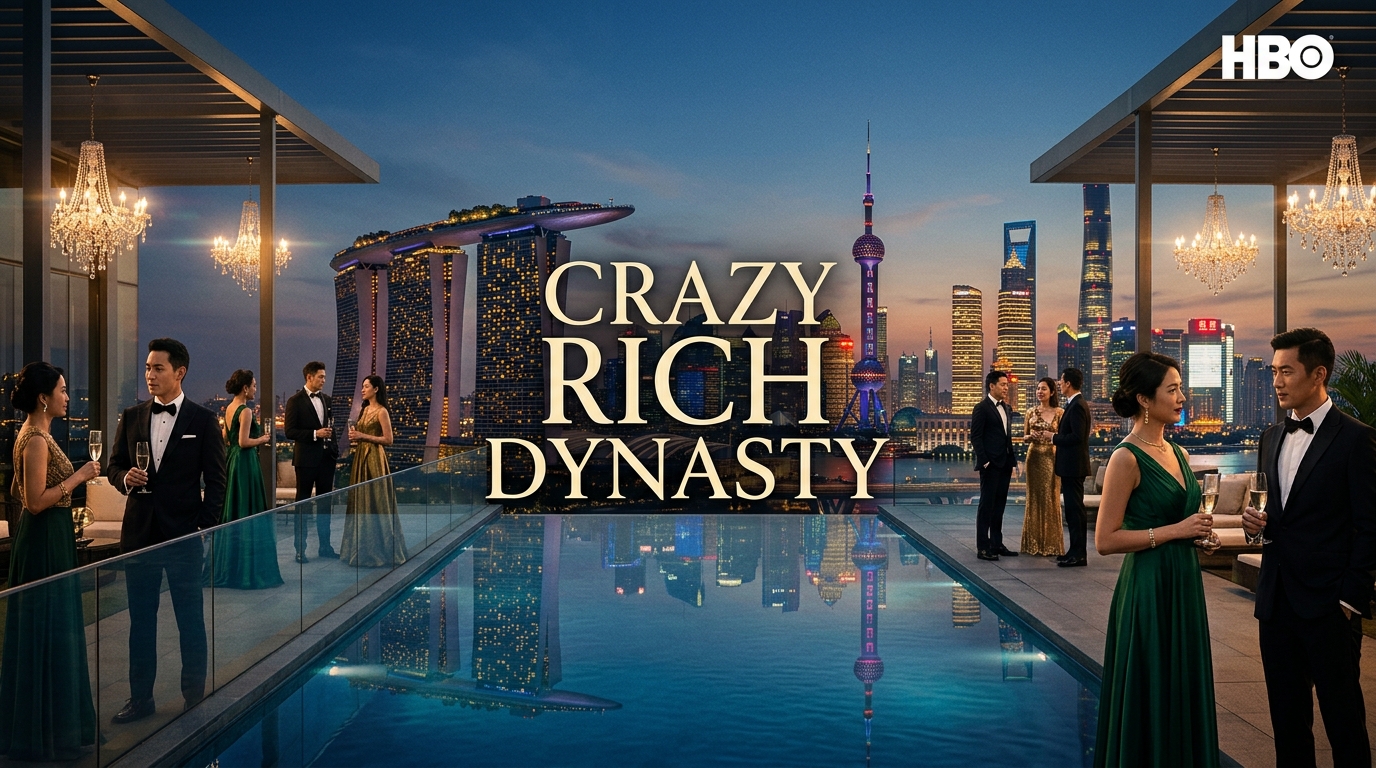
When Warner Bros. Discovery officially confirmed that Kevin Kwan’s global literary sensation would bypass movie theaters and arrive on television as an eight-episode HBO original drama series, it marked one of the most calculated strategic realignments in modern entertainment. The project reunites original headliners Constance Wu (Rachel Chu), Henry Golding (Nick Young), and Ronny Chieng as series regulars, alongside Oscar-winner Michelle Yeoh returning as matriarch Eleanor Young in a recurring capacity. Crucially, original co-writer Adele Lim takes full command as showrunner, writer, and executive producer, with Jon M. Chu returning to executive produce. Yet beneath the fanfare of a reunited ensemble lies a quiet admission of Hollywood’s shifting economic reality: the $60 million studio theatrical romantic comedy is officially dead.
The Bittersweet Vindication of Adele Lim
To understand why this sequel took eight years to materialize requires examining Hollywood’s fraught racial pay disparities. Back in 2019, fresh off the original film’s $238.5 million box office haul, Adele Lim walked away from the planned sequel after Warner Bros. offered her roughly one-eighth of the salary offered to her white male co-writer Peter Chiarelli. Her principled exit brought development to a grinding halt, sparking an industry-wide reckoning over how Asian creators were valued inside legacy studio suites.
Seven years later, Lim’s return as sole showrunner and executive producer is an unequivocal victory for equitable labor. By holding out, Lim secured complete creative sovereignty, unprecedented salary parity, and final cut authority over the adaptation of Kwan’s follow-up bestsellers, China Rich Girlfriend and Rich People Problems. Her elevation ensures that the narrative will not be filtered through a tourist’s lens, but grounded in the razor-sharp familial satire and linguistic nuances that defined her original contributions.
| Production Era | 2018 Theatrical Release | 2026 HBO Series Pivot | Strategic Shift Rationale |
|---|---|---|---|
| Format & Scope | 120-minute studio rom-com feature | 8-hour prestige episodic drama | Deeper multi-generational character arcs |
| Budget & Distribution | $30M budget; global theatrical rollout | High-end episodic budget; streaming anchor | Theatrical theatrical risk mitigated by subscriber retention |
| Creative Leadership | Co-written under contested pay terms | Adele Lim as sole Showrunner & EP | Complete creative sovereignty and equitable pay |
| Narrative Focus | Singapore old money vs. American immigrant | Mainland Chinese oligarchs & sovereign wealth | Geopolitical intrigue and high-stakes financial warfare |
The Geopolitical Minefield of Mainland Oligarchs
The transition from film to long-form episodic television is also an artistic necessity driven by the radical shift in Kevin Kwan’s source material. The 2018 film was a sunny Singaporean fairy tale centered on high-society etiquette, street food culture, and old-money Peranakan dynasties. Its sequel, China Rich Girlfriend, enters an entirely different, morally murky universe: the corrupt, hyper-leveraged underworld of mainland Chinese mega-billionaires, shadow banking networks, Shanghai private clubs, and state-connected real estate magnates.
Attempting to compress that sprawling world into a two-hour theatrical film designed for a global box office was virtually impossible—especially given current US-China geopolitical frictions and Beijing’s stringent film censorship apparatus. An American theatrical release depicting Chinese private equity barons engaging in illegal capital flight and illicit pharmaceutical operations would face an automatic ban in Chinese theaters. By shifting to HBO’s subscriber-funded streaming model, Warner Bros. liberates the creative team from the tyranny of the Chinese box office censors, allowing the series to explore mainland financial intrigue with the unsparing bite of Succession.
(Responsive / Native Ad)
The Television Dynasty: Reimagining the Asian Ensemble
By moving the franchise to HBO, Warner Bros. Discovery is building a high-fashion Asian family drama capable of rivaling the network’s flagship prestige hits. With Constance Wu and Henry Golding’s characters stepping into high-stakes global philanthropy and corporate governance, the narrative evolves far beyond the initial culture clash of an Asian American academic meeting her boyfriend’s disapproving mother.
The episodic canvas allows supporting characters—from Ronny Chieng’s vainglorious Eddie Cheng to Gemma Chan’s Astrid Leong—to explore complex subplots regarding inheritance laws, corporate tax avoidance, and the isolation of elite dynastic marriages. As production prepares to roll cameras across Singapore, Hong Kong, and London in 2027, Crazy Rich Asians has transformed from a standalone rom-com milestone into a multi-season cultural institution. It proves that while Hollywood’s golden age of theatrical comedies may have passed into memory, the appetite for watching the ultra-wealthy tear each other apart in designer silks is more insatiable than ever.