 Hot
Hot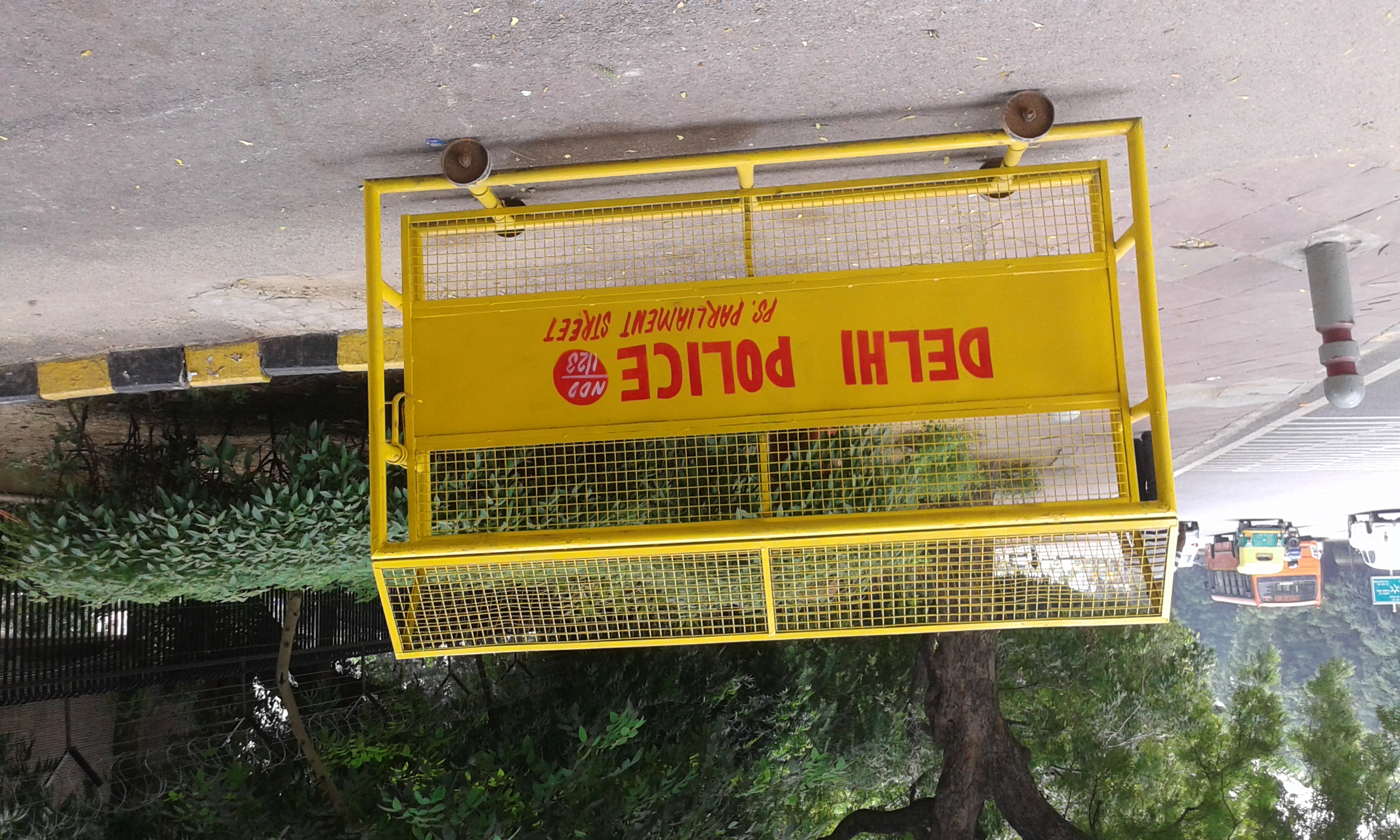
New Delhi has awoken to the physical architecture of a siege. Across the heart of the national capital—from the diplomatic corridors of Lutyens’ Delhi to the perimeter checkposts of Singhu, Tikri, and Ghazipur—thousands of armed security personnel have erected multi-layered steel barriers, razor wire spools, and AI-enabled facial recognition checkpoints. With over 23,000 personnel from the Central Armed Police Forces (CAPF) mobilized between October 8 and 12, the administrative machinery has effectively converted the capital into an impregnable zone ahead of a planned October 10 gathering by the Cockroach Janta Party (CJP) demanding the immediate resignation of Chief Election Commissioner (CEC) Gyanesh Kumar.
While public demonstrations are a staple of Delhi’s political landscape, the scale of state response mirrors security protocols reserved for global summits like the G20 or high-level counter-insurgency alerts. Authorities have enforced Section 163 of the Bharatiya Nagarik Suraksha Sanhita (BNSS) across New Delhi, formally rejected the demonstration permit for Jantar Mantar, ordered local liquor shops shut across October 9 and 10, and elevated CEC Gyanesh Kumar’s personal security detail to Z+ category.
When 7,000 Anti-Insurgency Troops Are Diverted to Guard Urban Roundabouts
The most revealing metric of the current mobilization is not just the aggregate troop count, but where these forces were drawn from. Internal deployment orders confirm that roughly 7,000 Central Reserve Police Force (CRPF) personnel were abruptly reassigned from active operational duties in Chhattisgarh’s Maoist belt and sensitive districts of West Bengal to police Delhi’s arterial roundabouts. An additional 12,000 personnel were airlifted directly into the capital.
| Deployment Component | Scale & Origin | Operational Objective |
|---|---|---|
| Total CAPF Mobilization | 23,000 Personnel | Area containment from Oct 8 to Oct 12 |
| CRPF Reassignments | 7,000 Troops (Bengal & Chhattisgarh) | Border cordon & strategic choke points |
| Specialized Women Units | 500 Extra Personnel | Rapid crowd mitigation & student engagement |
| Legal Architecture | Section 163 BNSS Imposed | Complete ban on assembly >4 persons |
| Institutional Guard | Z+ Security Envelope | 24/7 fortified perimeter at CEC residence & Nirvachan Sadan |
Diverting frontline counter-insurgency battalions to monitor university students and political agitators highlights the government’s acute nervousness. Military analysts warn that stripping active battalions from volatile central Indian corridors creates temporary security voids elsewhere, all to preempt a civil protest in the national capital.
The ‘Special Intensive Revision’ Trigger: Why Electoral Rolls Sparked ‘Andolan 2.0’
At the center of the confrontation lies the controversial Special Intensive Revision (SIR) of electoral rolls overseen by the Election Commission of India. CJP conveners Abhijeet Dipke and Saurav Das—flanked by prominent student federations including AISA, SFI, AISF, and the Aam Aadmi Party’s student wing, ASAP—allege that the SIR was weaponized to scrub hundreds of thousands of legitimate voters from registry databases in key contested constituencies.
Opposition leaders and civil rights watchdogs argue that the deletions disproportionately hit minority, migrant, and working-class urban voters while remaining shielded behind algorithmic opacity. By dubbing the October 10 assembly as “Andolan 2.0,” organizers have tapped into widespread public unease over institutional capture, framing Gyanesh Kumar’s continued leadership of the Election Commission as an existential threat to multi-party democracy.
Section 163, Facial Scanners, and Preemptive PGs Sweeps: The Blueprint of Urban Containment
To guarantee that protesters never physically assemble, the Delhi Police has instituted a preemptive cordon that begins miles outside the city limits. Interstate buses arriving from Haryana, Uttar Pradesh, and Punjab are undergoing roadside manifests checks. Inside Delhi’s university hubs—including North Campus, JNU, and Jamia—police liaisons have engaged Resident Welfare Associations (RWAs) and paying guest (PG) owners, issuing informal notices demanding landlords report student delegations planning to march.
(Responsive / Native Ad)
                    PREEMPTIVE CONTAINMENT APPARATUS
                                    │
       ┌────────────────────────────┼────────────────────────────┐
       ▼                            ▼                            ▼
Outer Border Cordon         Collegiate Surveillance      Institutional Shield
- Singhu / Tikri Scanners   - PG / RWA Informant Notices - Z+ Paramilitary Ring
- Interstate Bus Manifests  - Drone & Facial Scanning    - Nirvachan Sadan Sealed
Civil liberties attorneys point out that utilizing Section 163 of the BNSS—the successor to the colonial Section 144 CrPC—alongside biometric surveillance cameras represents an unprecedented expansion of preventive policing. By criminalizing the mere intent to commute toward Jantar Mantar, the administration has set a formidable precedent for how urban dissent will be managed under India’s newly codified criminal statutes.
From Meme Culture to Institutional Threat: The Unsettling Rise of the Cockroach Janta Party
What unnerves South Block most is the unorthodox anatomy of the Cockroach Janta Party itself. Born as a satirical anti-establishment critique on social media, the group draws its namesake from the resilience of the common citizen: unable to be crushed by bureaucratic boots, surviving in the cracks of political machinery.
Unlike conventional opposition parties constrained by parliamentary decorum, electoral alliances, or funding scrutiny, the CJP operates with decentralized digital agility. Its leadership leverages viral short-form video explainers, crowdsourced travel coordination, and youth disenchantment with unemployment and inflation. The fact that established student unions like SFI and AISA have rallied behind a digital-first pressure group demonstrates how traditional political structures in India are being outpaced by nimble, internet-native insurgencies.
The Constitutional Precipice: Can the Election Commission Rebuild Neutrality Under Z+ Guard?
The ultimate tragedy of the October 10 standoff is the optical damage inflicted upon India’s democratic referees. The Election Commission of India historically commanded universal moral authority precisely because it operated with transparent public trust, not behind phalanxes of sandbagged bunkers and paramilitary convoys.
Even if 23,000 security troops successfully suppress the October 10 gathering and keep Jantar Mantar deserted, the establishment cannot police away the underlying crisis of faith. When the Chief Election Commissioner requires a Z+ security fortress and thousands of combat-hardened soldiers to insulate himself from citizen scrutiny, the legitimacy of upcoming electoral cycles has already suffered an enduring blow.