 Hot
Hot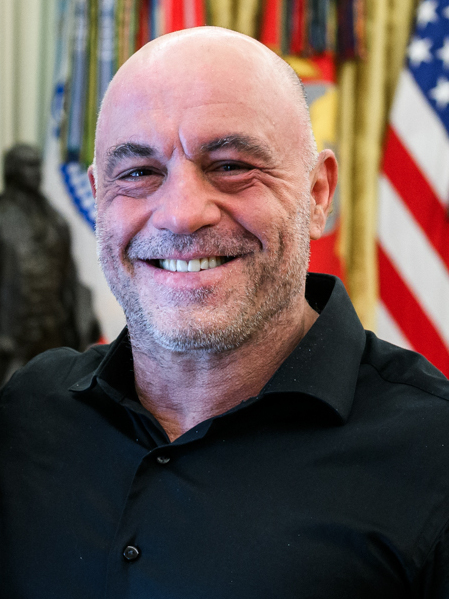
Spotify has officially renewed its blockbuster partnership with Joe Rogan, securing a new multiyear licensing agreement for The Joe Rogan Experience (JRE). While the streaming giant publicly declined to confirm exact balance-sheet figures, industry reports—led by The Wall Street Journal—estimate the new deal carries an earnout valuation approaching $250 million, matching the historic watermark of his previous renewal. With over 18 million followers on Spotify and more than 21 million subscribers on YouTube, Rogan remains the single most influential—and commercially lucrative—individual broadcaster in digital media.
Yet beneath the eye-watering headline numbers lies a profound capitulation by Silicon Valley: Big Tech has officially abandoned its decade-long dream of locking premier audio behind walled gardens.
The Death of Exclusivity: How the Walled-Garden Strategy Burned Billions
When Spotify originally signed Rogan in 2020 for a reported $100 million, the thesis was straightforward: pull the world’s biggest podcast off Apple Podcasts and YouTube, force listeners to download the Spotify app, and convert those listeners into paid premium subscribers. Spotify spent well over $1 billion executing that playbook, acquiring narrative studios like Gimlet Media and Parcast while signing exclusive deals with celebrity figures.
The strategy failed. Gating content drastically capped audience growth, angered longtime listeners, and choked off top-of-funnel reach. More critically, it crippled podcast advertising margins. Advertisers do not pay premium programmatic rates for fenced-in audio; they pay for cultural ubiquity and raw impression volume. By the time Spotify renegotiated in 2024—and now re-upped in late 2026—the platform accepted reality: Rogan’s content must flow freely across Apple Podcasts, Amazon Music, and YouTube to maximize enterprise ad revenue.
| Deal Era | Reported Value | Distribution Architecture | Core Business Metric |
|---|---|---|---|
| 2020 Initial Pact | ~$100 Million | Strictly Spotify Exclusive | Paid Subscriber Acquisition |
| 2024 Renewal | ~$250 Million | Multi-Platform Hybrid | Ad Revenue Share & Broad Reach |
| 2026 Extension | ~$250 Million (Earnout) | Fully Omnichannel Syndicate | Spotify Audience Network (SPX) Monetization |
Behind the $250 Million Valuation: Ad Sales, Video Feeds, and Revenue Splits
The financial mechanics of the 2026 extension reflect Spotify’s evolution from an audio subscription utility into a programmatic advertising powerhouse. Under the renewed terms, Spotify handles global advertising sales for the show across audio and video formats, leveraging its proprietary Spotify Audience Network (SPAN).
Jordan Newman, Spotify’s Head of Content Partnerships, emphasized that the show’s cross-platform distribution allows brands to reach a “massive, highly engaged global audience.” Instead of treating outside platforms as competitors, Spotify acts as Rogan’s master distributor, monetizing his audience on YouTube and Apple while taking a handsome cut of sponsorship packages, host-read spots, and dynamic ad insertions.
                    THE OMNICHANNEL MONETIZATION ENGINE
                                     │
                                     ▼
                      The Joe Rogan Experience (JRE)
                                     │
           ┌─────────────────────────┼─────────────────────────┐
           ▼                         ▼                         ▼
      Spotify App              YouTube Video            Apple / Amazon
   - Direct Listeners        - 21M+ Subscribers       - RSS Syndication
   - Video Interactivity     - Algorithmic Reach      - Legacy Audio Reach
           │                         │                         │
           └─────────────────────────┼─────────────────────────┘
                                     ▼
                     Spotify Audience Network (SPAN)
                     Centralized Ad Sales & Revenue Split
The Distribution Paradox: Why Spotify Now Needs YouTube to Win Podcasting
The renewal underscores an uncomfortable paradox for audio streaming executives: YouTube has quietly become the undisputed king of podcast consumption. The rise of multi-camera studio feeds and algorithmic video recommendations made video podcasts the dominant format for younger demographics.
(Responsive / Native Ad)
Rather than competing head-to-head with Google’s video infrastructure, Spotify’s agreement allows Rogan to upload full-length video episodes directly to YouTube. In doing so, Spotify uses YouTube as a free marketing funnel. A viewer discovering a controversial three-hour Rogan clip on YouTube is frequently steered back to Spotify for backlog listening, interactive polls, and mobile background play.
Monopolizing the Megaphone: What Rogan’s Re-Up Means for Mid-Tier Creators
While the deal cements Rogan’s status as media royalty, it highlights an accelerating crisis of inequality across the creator economy. The podcasting industry has hardened into an unforgiving, winner-take-all tournament:
- The Superstar Premium: Streaming platforms are increasingly funneling their entire programming budgets into an elite tier of 5 to 10 mega-creators who drive predictable, guaranteed listener volume.
- The Mid-Tier Squeeze: Independent creators with audiences between 50,000 and 500,000 listeners are confronting cratering host-read sponsorship rates, canceled studio grants, and algorithmic neglect.
- Studio Consolidation: Legacy media conglomerates that attempted to build expensive internal podcast divisions have shuttered operations, leaving solo talent to shoulder production costs.
The Shifting Balance of Power: Can Streaming Platforms Ever Subdue Sovereign Creators?
Ultimately, Joe Rogan’s $250 million payday marks a watershed moment in the relationship between technology platforms and individual talent. For the past fifteen years, digital platforms dictated terms to artists, writers, and podcasters, capturing the lion’s share of network effects.
Rogan’s consecutive multi-hundred-million-dollar non-exclusive contracts prove that sovereign individual brands now wield greater leverage than the networks hosting them. Spotify did not renew Joe Rogan because it could control his feed; it renewed him because it simply could not afford to let him walk away to a competitor. In the new media landscape, platforms are no longer walled gardens—they are merely pipes paying homage to the creators who fill them.