 Hot
Hot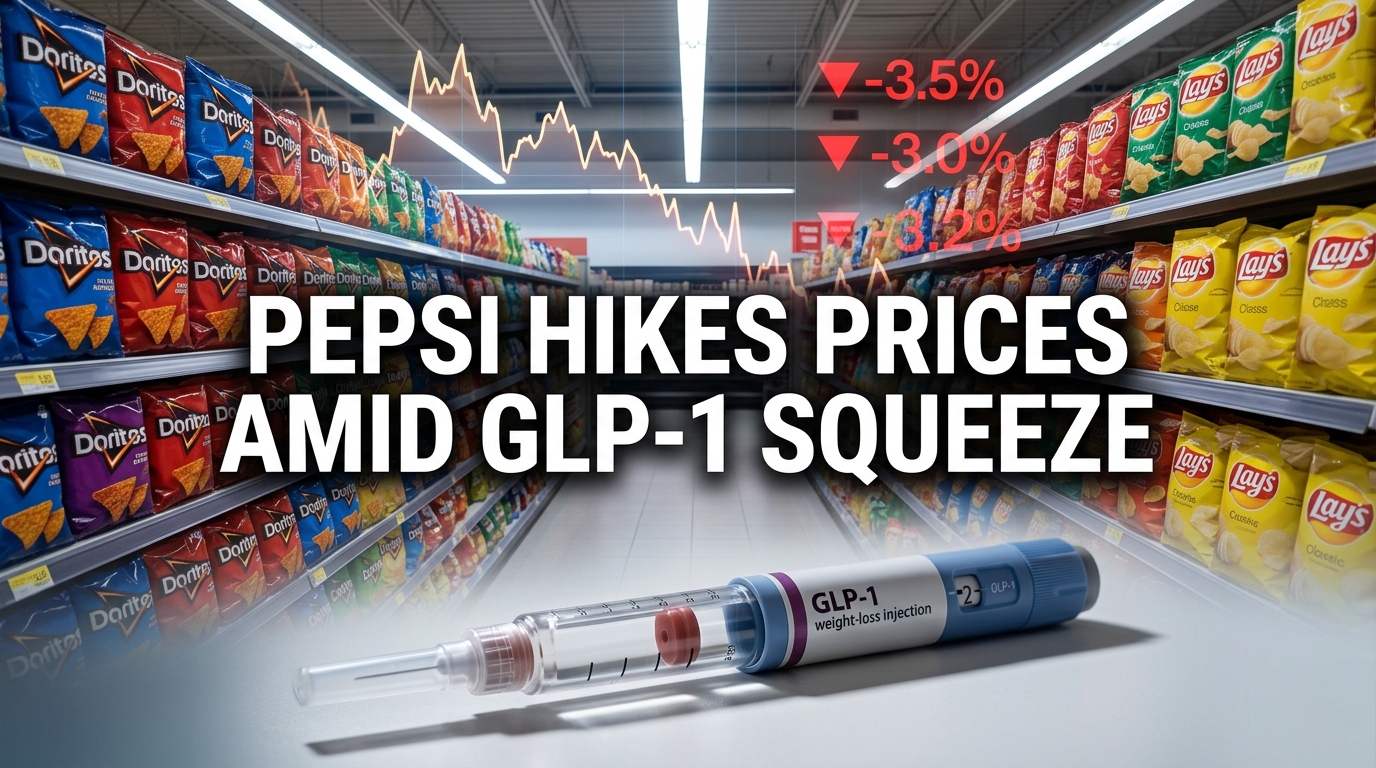
In a bold move that risks reigniting shopper backlash, beverage and snack behemoth PepsiCo confirmed plans to implement fresh price increases across flagship products including Doritos, Ruffles, SunChips, and carbonated beverages. The low-to-mid single-digit percentage price hikes, slated to roll out into late 2026 and early 2027, come on the heels of a sobering third-quarter earnings report that laid bare the persistent weakness of the company’s core North American franchise.
While global revenue held up with modest gains, PepsiCo’s North American volume numbers told a starkly different story: beverage sales volume slumped 2%, while snack food volumes remained completely flat. The reversal in pricing strategy marks a dramatic pivot for management, which had spent early 2026 offering targeted discounts of up to 15% on staples like Lay’s and Cheetos to woo back grocery shoppers alienated by years of cumulative inflation.
The Pricing Whiplash: Reversing 2026 Discounts Under Margin Strain
The decision to ratchet prices back upward exposes the precarious tightrope global packaged-food conglomerates are walking. In the first half of 2026, PepsiCo executives had conceded that consumer price sensitivity had reached an inflection point, prompting promotional allowances and value-pack rollouts across major retail aisles. However, gross margins were swiftly cannibalized by a renewed surge in agricultural commodity costs, escalating freight expenses, and the expiration of specialized tariff refund mechanisms that had artificially cushioned operating margins throughout 2025.
| Factor | Early 2026 Stance | Late 2026 Pivot |
|---|---|---|
| Pricing Strategy | Rollbacks up to 15% on select snack bags | Selective hikes (low-to-mid single digits) |
| North America Snack Volume | Modest rebound anticipated | Flatlined (0% growth in Q3) |
| Beverage Volume | Stagnant | Down 2% year-over-year |
| Primary Margin Headwind | Consumer elasticity / trade-down | Input costs, fuel, and tariff refund expirations |
Executive leadership maintained that even with the incoming adjustments, shelf prices for core snack lines will remain marginally below their peak levels from late 2024. Yet for middle-class households already rationing grocery budgets, any uptick threatens to push everyday consumers permanently toward private-label store brands.
The Ozempic Factor: When Appetite Suppression Meets Ultra-Processed Giants
Beyond cyclical inflation, PepsiCo is confronting an existential structural headwind that traditional consumer packaged goods (CPG) models were never designed to weather: the mass adoption of GLP-1 receptor agonists such as Ozempic, Wegovy, and Zepbound. Medical research and consumer tracking data indicate that patients on GLP-1 regimens slash impulsive snacking and high-sodium, ultra-processed food consumption by anywhere from 20% to 35%, redirecting their daily calorie intake toward lean proteins, fiber, and functional beverages.
| Consumer Shift | Pre-GLP-1 Routine | Post-GLP-1 Reality | Impact on Frito-Lay |
|---|---|---|---|
| Snacking Frequency | 2.8 snack occasions / day | 1.3 snack occasions / day | Fewer impulse grab-and-go purchases |
| Portion Appetite | Multi-serving party bags | Single-serve or mini packs | Pressures unit margins and volume |
| Nutritional Preference | High sodium, bold cheese seasonings | High protein, zero added sugar | Accelerates pivot to “permissible” lines |
Frito-Lay’s historical growth engine was built on craveability, crunch, and dopamine-inducing seasoning formulas. When millions of higher-income consumers chemically silence the biological urge for late-night salty snacks, volume contractions cease to be temporary anomalies. Instead, they signal a permanent rewiring of the American pantry.
(Responsive / Native Ad)
The Activist Crosshairs: Elliott Management’s $4 Billion Ultimatum
The timing of the price hikes cannot be separated from mounting boardroom friction. Late last year, billionaire Paul Singer’s activist hedge fund Elliott Investment Management quietly built a massive $4 billion stake in PepsiCo, demanding aggressive operational streamlining, margin remediation, and a hard reassessment of the company’s capital allocation between beverages and snacks.
Elliott’s thesis argues that PepsiCo has allowed bureaucratic bloat to depress operating margins compared to leaner peers, while failing to maximize the standalone cash-generation power of Frito-Lay North America. By raising prices now, executive leadership is attempting to show Wall Street that it can defend operating income and hit profitability targets without dismantling the conglomerate’s unified distribution infrastructure. However, if price hikes trigger sharper volume declines, Elliott’s calls for radical restructuring or corporate carve-outs will grow exponentially louder.
The Consumer Breaking Point: How Store Brands Threaten Frito-Lay’s Shelf Monopoly
The ultimate gamble rests on whether brand loyalty for Doritos and Lay’s remains inelastic in an era of heightened economic vigilance. Supermarket giants from Walmart to Kroger have significantly upgraded their private-label snack portfolios, delivering gourmet tortilla chips and kettle-cooked alternatives at price discounts exceeding 30%.
As PepsiCo pushes forward with its planned adjustments, it is pairing the hikes with an accelerated pivot toward “permissible snacking”—ramping up investments in baked lines, whole grains, and protein-boosted crisps while announcing deeper structural cost cuts across regional distribution facilities. Whether this dual strategy can stave off both activist revolts and biological appetite suppression will define the next decade of big food.